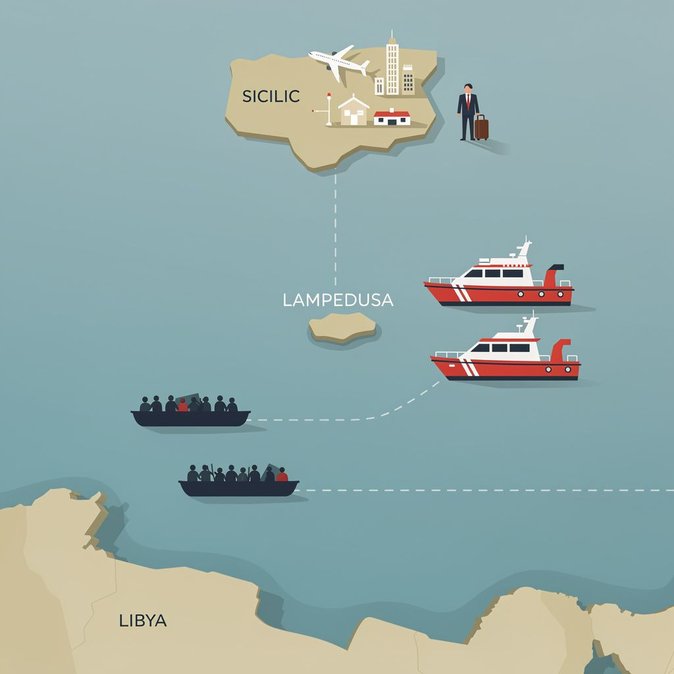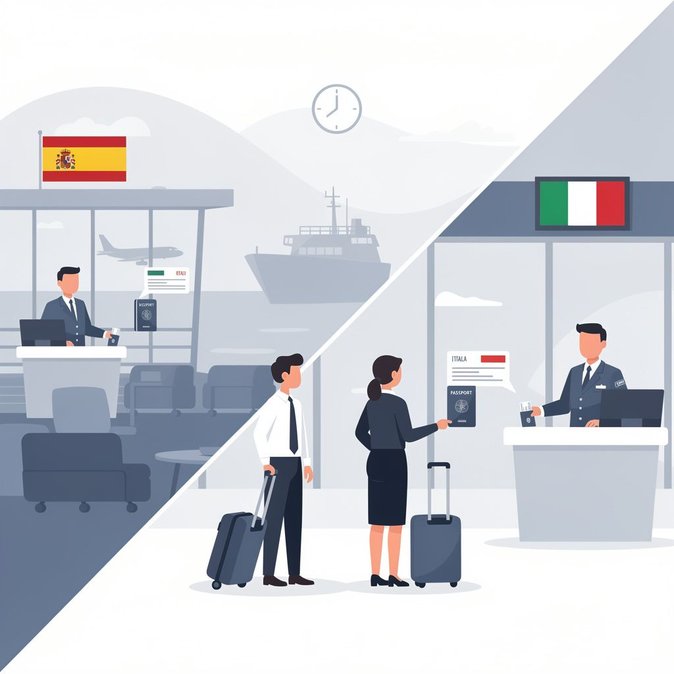
Travellers heading from Italy to Spain should brace for passport inspections normally unheard of within the Schengen Area. Late on 8 October 2026 the Spanish Ministry of the Interior notified Brussels that, effective immediately, it is re-introducing controls at all internal air- and sea-borders with Italy until 22 October. The measure is justified by Madrid as a response to a “continued threat to public policy and internal security” linked to high volumes of secondary migrant movements across the central Mediterranean route. While the EU’s Schengen Borders Code allows such suspensions in exceptional circumstances, they remain disruptive for business passengers who have become accustomed to walk-through travel between the two countries. Airlines operating the 800-plus weekly flights on the Italy–Spain market have been told to allocate additional ground-time so that Guardia Civil officers can perform spot checks in the jet-bridges and at ferry ports. Carriers warn that even a 3-minute average inspection could cascade into missed slots at congested airports such as Madrid-Barajas and Barcelona-El Prat. Corporate mobility managers with staff shuttling between Milan, Rome and Spanish manufacturing clusters have already begun issuing travel alerts. Deloitte Italy’s Global Mobility desk estimates that an engineer on a same-day trip from Turin to Zaragoza could face up to 40 minutes of cumulative queuing at departure and arrival, nullifying the time saved by non-stop flights. Employers are advised to build in buffer time, carry proof of assignment letters and ensure that non-EU assignees hold valid Italian soggiorno permits, which Spanish officers may request. From a compliance angle, the temporary controls do not affect rights of residence or work; they simply require travellers to show travel documents again. However, companies should document employees’ movements to avoid payroll-tax residence questions that sometimes surface when border stamps reappear. The European Commission will monitor proportionality and could cut short the measure if the security situation improves before 22 October. Looking ahead, the episode underlines how fragile border-free travel can be in times of migratory pressure. If flows via the central Mediterranean remain high, other Schengen partners could copy Spain’s move—adding more friction just as Italy prepares for its year-end business travel peak.