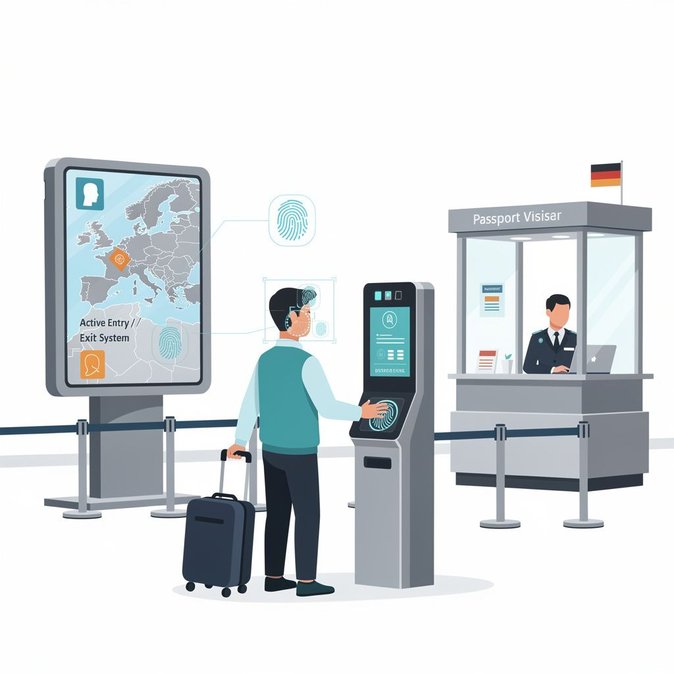
On 8 October 2026 the Federal Interior Ministry tabled the long-awaited “KIMVG” bill, which would embed artificial-intelligence tools across Germany’s migration-management chain. The legislation, now before parliament, aims to automate identity verification, risk-profiling and file allocation in the Federal Office for Migration and Refugees (BAMF) as well as in local foreigners’ authorities. Under the draft, asylum applicants would submit biometric data through a mobile app, which an AI engine would cross-check against EU and Interpol databases in real time. The system would also forecast case-processing times and flag complex files for specialist review. For work-visa applicants, the Interior Ministry plans a “once-only” principle: data supplied in the Consular Services Portal abroad would auto-populate residence-permit files after arrival, reducing double submissions. Civil-society groups have raised privacy concerns, noting that the bill allows automated decision proposals that could influence credibility assessments. The government insists final rulings will remain with human case officers and says the AI modules have passed bias audits. A five-year pilot is pencilled in for 2027-31 at the Nuremberg and Berlin processing centres, with a budget of €340 million drawn from the Digital Sovereignty Fund. For global-mobility teams, the reform promises shorter lead-times for Blue-Card and ICT permits once fully deployed. Companies should, however, prepare for stricter data-quality requirements—missing passport scans or inconsistent job details will automatically trigger “orange” risk flags that can slow the dossier.
Source: Deutscher Bundestag