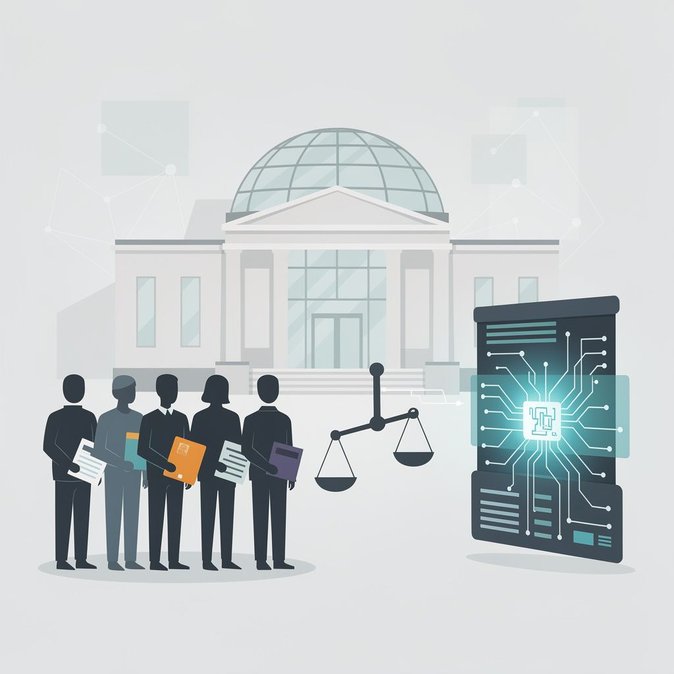
BERLIN — The Bundestag on Thursday, 8 October 2026, gave first-reading approval to the government’s Artificial-Intelligence in Migration Administration Bill (KIMVG). The draft law establishes a legal basis for Germany’s migration authorities—including embassies, the Federal Office for Migration and Refugees (BAMF) and local foreigners’ offices—to deploy machine-learning tools throughout visa, asylum and residence-permit workflows. According to the explanatory memorandum, AI modules will be allowed to ingest historic case files to identify decision bottlenecks, predict fraud patterns and propose consistency checks. Crucially for global mobility, the bill authorises an automated cross-check of applicant-supplied information against publicly available online data when “well-founded doubts” arise—potentially accelerating background verification for work-permit and Blue-Card applicants. Data-protection safeguards mirror the EU AI Act: any fully automated negative decision must be reviewable by a human officer, and applicants will be informed whenever an AI system materially influences an outcome. Supporters from the governing coalition argued that digitisation is essential to clear mounting backlogs that currently leave some skilled-worker visa applicants waiting six to nine months for an appointment. Business associations welcomed the promise of faster, more predictable processing, but civil-liberty groups warned of algorithmic bias, especially against applicants with limited digital footprints. Opposition MPs demanded stronger transparency rules and an independent audit regime. The Interior Committee will hold expert hearings later this month, with final passage targeted for the first quarter of 2027 so that pilot deployments can begin at selected German missions abroad before next summer’s travel peak. Employers relying on international hires should prepare to supply more structured data—and possibly social-media evidence—when invitations for the new “enhanced digital dossier” testing phase are issued.
Source: Deutscher Bundestag