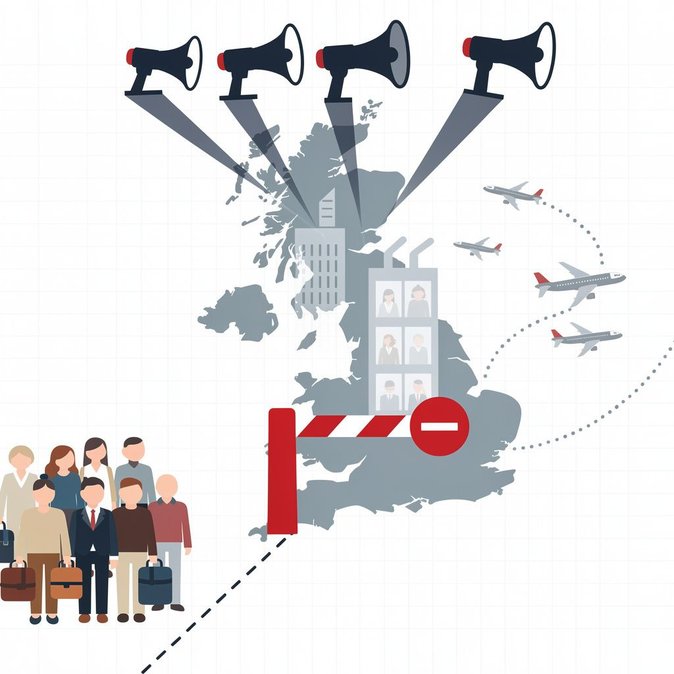
Populist party Reform UK unveiled a manifesto pledge on Monday to suspend the UK’s entire asylum system for up to five years if it wins the next general election. The plan—announced by party leader Nigel Farage—would void all pending claims, shut down existing resettlement and family-reunion routes, and deport an estimated 90,000 people whose cases are awaiting appeal. Humanists UK and other civil-society organisations immediately condemned the proposal, arguing that withdrawal from the 1951 Refugee Convention and the European Convention on Human Rights would undermine the rule of law and expose legitimate refugees to refoulement. Business groups also voiced alarm: the Institute of Directors warned that unilateral treaty breaches could jeopardise trade talks and foreign-talent pipelines, while tech-sector lobby TechUK noted that 21 % of UK start-up founders entered via humanitarian protection paths. Legal and mobility implications – • Companies employing asylum-seekers on work permission (e.g., Shortage Occupation concessions) could face abrupt curtailment of leave. • Suspension would likely trigger mass litigation in the upper tribunals and European courts, creating years of uncertainty. • International assignees may question the UK’s commitment to international norms, complicating relocation packages. Political context – Although Reform remains a minor party in Westminster, recent polling shows it siphoning votes from both Conservatives and Labour in coastal constituencies affected by small-boat landings. Main parties may feel pressure to harden their own immigration stances, adding further volatility to policy planning for global mobility teams. Action points – Employers should track upcoming Parliamentary debates and assess workforce exposure to humanitarian routes. Mobility policies should include contingency clauses for sudden rule changes, especially for dependants of employees who may be affected by broader asylum measures.
Source: Humanists UK