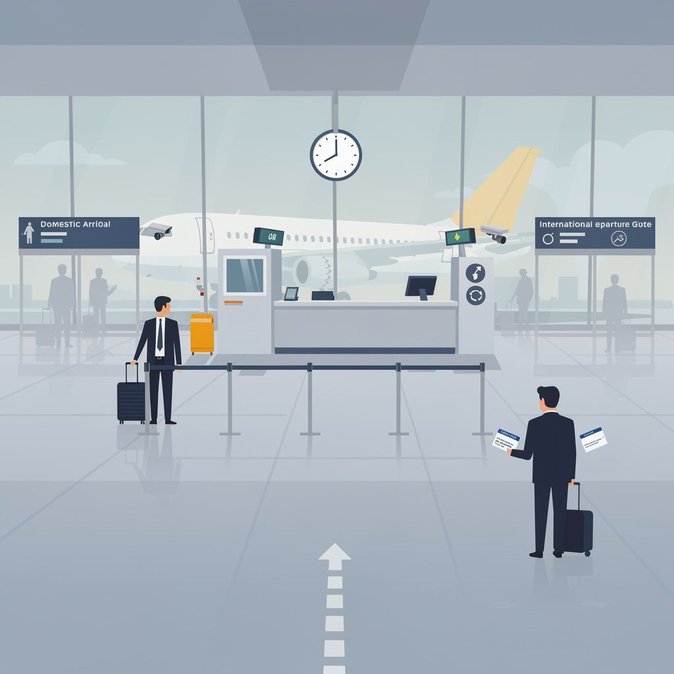
In a bid to plug gaps exposed by a recent immigration lapse, the civil aviation and home ministries have issued new standard-operating procedures that clearly distinguish ordinary interline or codeshare transfers from hub-and-spoke connections sold by Indian carriers such as Air India. Effective immediately, passengers flying on two different airlines under a single ticket (for example, Amritsar-Delhi on IndiGo connecting to Delhi-Munich on Lufthansa) will now receive the boarding pass for their onward international sector only after completing immigration formalities at the connecting hub. Airlines have been told to stop issuing both boarding passes at the origin airport unless the itinerary is part of an approved hub-and-spoke programme. Baggage will still be through-tagged, but carriers must deploy extra staff at boarding gates and transfer counters to verify that passports have been stamped before travellers enter the sterile international zone. The rules were triggered by a 4 September incident in which three Italian nationals, issued both boarding passes at Amritsar, boarded a Lufthansa flight in Delhi without ever passing immigration. A subsequent home-ministry review highlighted the risk of inadvertent illegal departures and potential security breaches at Indian hubs that handle more than 30 million passengers a year. Delhi airport has already opened additional counters, while Mumbai and Bengaluru are drawing up similar plans. For business travellers, the change means adding 10-15 minutes to their minimum connection time if their first leg is domestic. Travel managers are advising corporate flyers to reconfirm whether their connection is considered hub-and-spoke (where immigration can be done at origin) or standard interline (where it must be done at the hub) and to allow extra time accordingly. Airlines that fail to comply face penalties under the Immigration Act and could see their facility to issue international boarding passes from domestic airports suspended. Industry analysts welcome the clarity. “India’s push to become a global aviation hub only works if border controls are watertight and processes are consistent,” said Ameya Joshi of aviation consultancy Network Thoughts. The new SOPs, they add, bring India in line with practices at Changi and Dubai, enhancing confidence among foreign carriers that partner with Indian airports on through itineraries.
Source: Hindustan Times