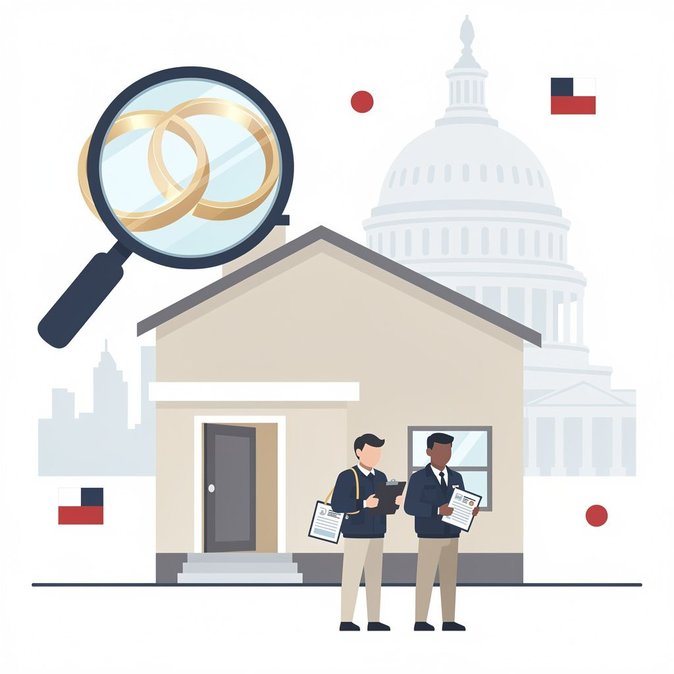
Department of Homeland Security investigators executed a search warrant at Representative Ilhan Omar’s Minneapolis residence on Monday, October 12, escalating a long-running inquiry into allegations that the third-term lawmaker misrepresented aspects of her marital history on earlier immigration filings. According to the Associated Press, agents arrived shortly after 7 a.m. and spent three hours photographing documents and seizing electronic devices. The warrant remains under seal, but congressional aides confirm the probe stems from claims—first raised during Omar’s 2018 campaign—that she wed her brother in 2009 to help him obtain a U.S. student visa. Omar has repeatedly denied the accusation and on Monday called the search “the latest escalation in a campaign of intimidation designed to silence immigrants and women of colour in public life.” No charges have been filed. From a global-mobility perspective, the case is extraordinary: it is rare for DHS to pursue a sitting member of Congress for alleged benefits fraud that dates back more than a decade. Immigration attorneys note that marriage fraud investigations typically hinge on contemporaneous evidence—joint leases, tax returns, social-media activity—that may be difficult to reconstruct so many years later. Prosecutors must also weigh the political firestorm that an indictment would ignite. Nevertheless, the search signals that the Trump administration is willing to leverage every immigration-enforcement tool at its disposal, even in high-profile contexts. Employers should expect intensified scrutiny of spousal relationships in adjustment-of-status applications, especially where documentary evidence is thin or foreign records are hard to authenticate. Companies that sponsor executives for green cards via the EB-1C multinational-manager route may want to budget extra time for Requests for Evidence related to family ties. If DHS ultimately brings a civil or criminal case, Omar could, in theory, face denaturalisation proceedings, though such outcomes remain exceedingly rare. The political ramifications—both for immigration policy and for Muslim-American representation—would be profound.
Source: Associated Press