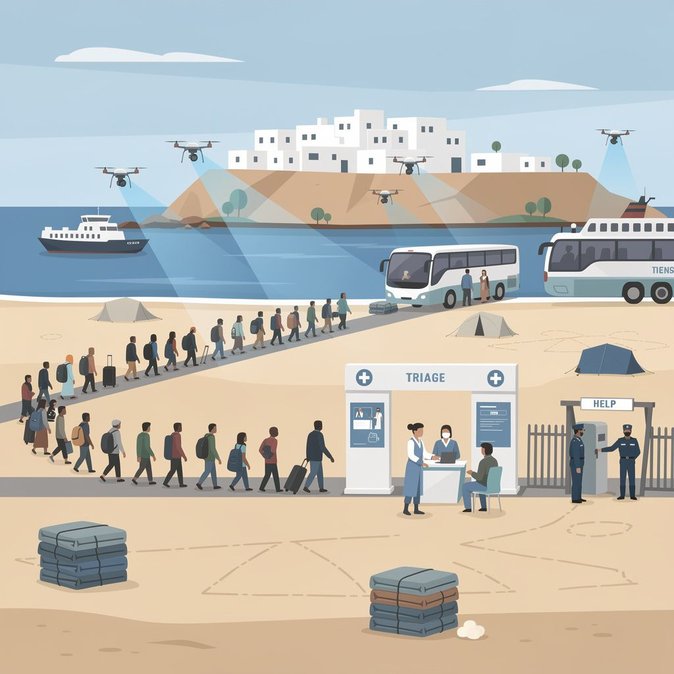
After dismantling the last major coastal camp on 11 October, the Spanish government is shifting its focus to small groups of migrants who still spend the night in parks, abandoned buildings and narrow streets of Ceuta. In a press conference on 14 October, Territorial Policy Minister Ángel Víctor Torres announced an “urban phase” of the crisis plan: joint National Police/Civil Guard teams will conduct targeted operations—some using drones and infrared cameras—to persuade or compel those outdoors to report to the Temporary Attention Centre for Foreigners (CATE). Torres declined to set a deadline but said the objective is to be able to declare the city free of improvised settlements “very soon.” Once in the CATE, migrants are registered, offered medical checks and must choose between seeking protection or accepting organised return. Authorities insist that accommodation and basic services are adequate: of the hospital’s 210 beds, only 20 are currently occupied by migrants. For local businesses and visiting executives, the clean-up should reduce disruptions around the port, beaches and tourist areas, but travellers can expect document inspections while operations are under way. Employers moving staff or equipment through Ceuta should schedule extra transit time and advise personnel to carry passports or EU IDs at all times. From a compliance angle, the crackdown underscores Spain’s stricter enforcement stance since July. Companies employing third-country nationals in the enclave should double-check residence status and renewals to avoid detention of workers caught up in street operations. The minister reiterated that voluntary return remains the preferred outcome and thanked security forces for avoiding violence during previous clearances—a point likely to reassure human-rights-conscious mobility managers.
Source: Europa Press