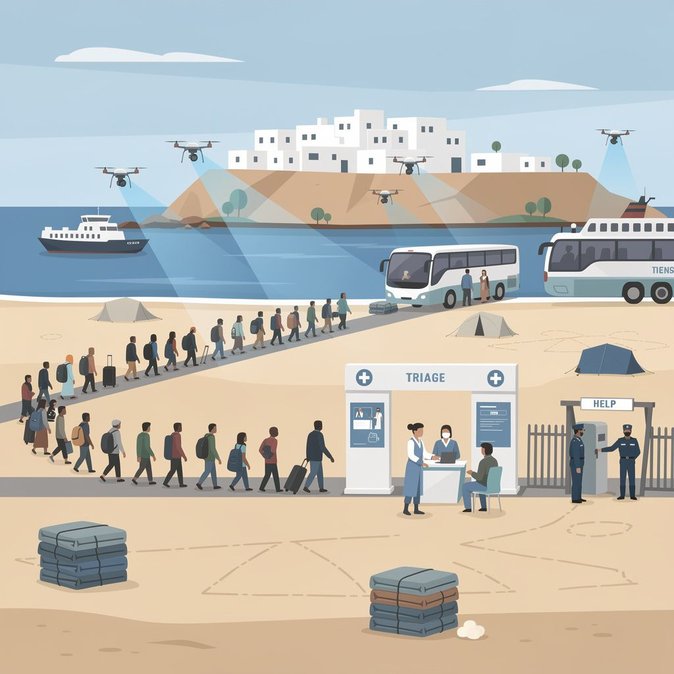
Maritime Rescue intercepted a small boat carrying 17 Maghrebi nationals off Ibiza’s north-east coast at 23:40 on 13 October, bringing the number of arrivals in the Pitiusas (Ibiza and Formentera) to 82 within a single day. Local newspaper Diario de Ibiza reports that total irregular arrivals to the Balearics have now surpassed 3,100 this year — already exceeding the 2025 figure with two and a half months to spare. Spanish officials attribute the spike to calmer seas and stepped-up Moroccan patrols along the Canary Route, which are pushing smugglers to launch shorter crossings from Algeria and northern Morocco toward the Balearics. While the islands lack large reception centres, Guardia Civil sources say most detainees are transferred to Valencia within 72 hours for processing – a logistical shuffle that strains ferry capacity and local police resources. From a corporate-mobility standpoint the uptick is beginning to affect tourism-sector staffing. Hoteliers in Ibiza town told the local chamber of commerce that police redeployments could slow the issuance of seasonal-worker NIE numbers at Eivissa’s single foreigners’ office, already battling a six-week backlog for digital-nomad visa appointments. Regional premier Marga Prohens has called on Madrid to grant the Balearics the same emergency funding mechanism that Canary Islands enjoy, warning that “the Mediterranean route is no longer secondary.” The Balearic parliament will debate a cross-party motion on 17 October that could see Spain petition Frontex for an Aerial Surveillance asset based in Palma for the winter. Companies relocating staff to the archipelago should prepare for sporadic ferry disruptions and heightened maritime checks that may extend boarding times on routes from Dénia and Valencia during the busy autumn-conference season.
Source: Periódico de Ibiza