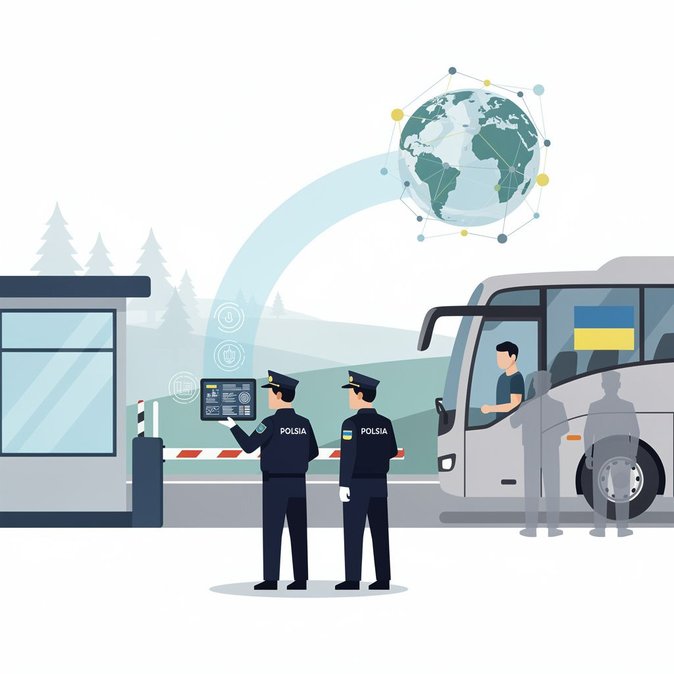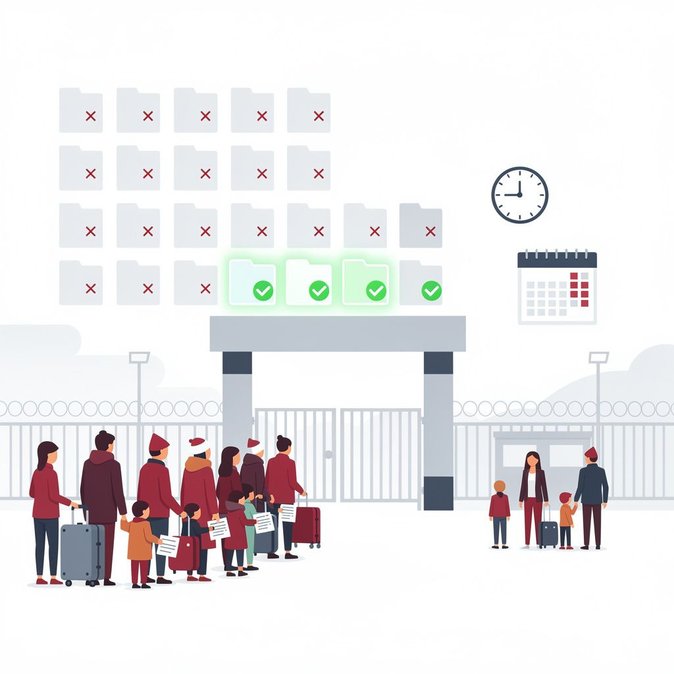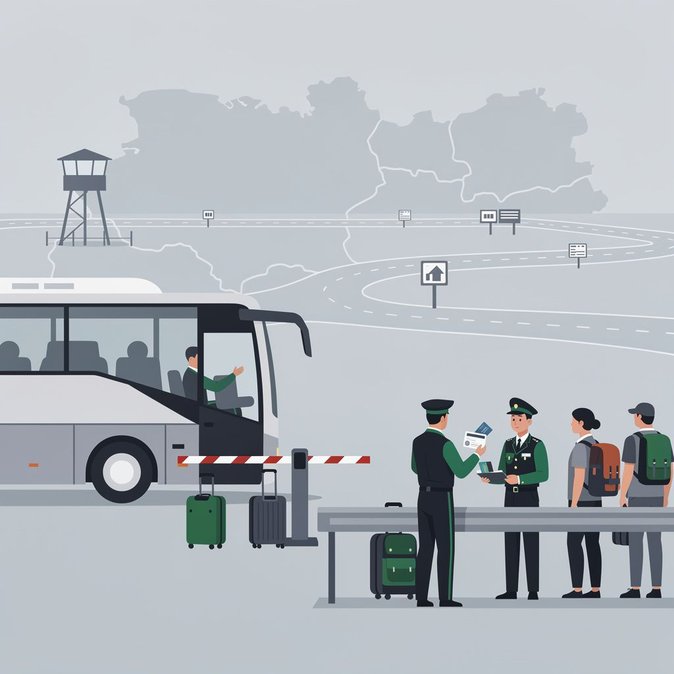
Senior officials from Poland’s Ministry of the Interior and Administration (MSWiA) held a high-profile meeting with the Border Guard command in Warsaw on 14 October to assess the force’s capacity to handle renewed migratory pressure on the eastern frontier. State secretaries Czesław Mroczek and Wiesław Szczepański praised the Guard’s ‘multi-layered barrier’ along the Belarus and Ukraine edges but pressed commanders for faster deployment cycles and upgraded night-vision kits. The review comes two weeks after Poland re-notified the European Commission of temporary Schengen-internal controls on the German and Lithuanian borders. According to data shared at the meeting, attempts at irregular entry along the Belarus section have risen 12 % month-on-month since August, driven partly by smugglers rerouting from Slovakia after Vienna extended its own frontier checks. For global-mobility teams the key takeaway is MSWiA’s plan to increase random document inspections on long-distance buses and private hire vehicles operating within 30 km of the frontier. That could translate into longer journey times for expatriate staff commuting between Warsaw and production plants in Podlaskie. Companies using posted-worker schemes should ensure drivers carry complete A1 and residence documentation. Officials also highlighted the Entry/Exit System (EES), noting that Polish officers have created 2 million biometric profiles since October 2025. Businesses should remind third-country assignees that overstays will be detected automatically at exit and may jeopardise future Schengen visa-applications.