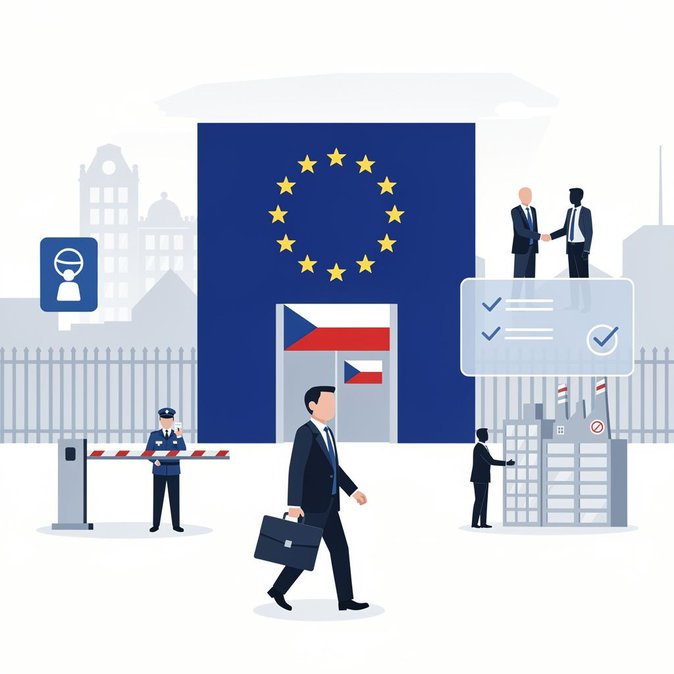
Prime Minister Petr Fiala travels to Brussels today (15-16 October 2026) for a European Council summit that will devote a full session to implementation of the EU Pact on Migration and Asylum—rules that entered into force in June and require member states, including Czechia, to overhaul border procedures, asylum reception and solidarity contributions. According to the meeting agenda released last night, leaders will review the first four months of the new regime, discuss remaining operational gaps and assess the Commission’s draft roadmap for 2027 interoperability between EES, ETIAS and national asylum databases. Czech diplomats say Prague will support tougher external-border screening but will resist automatic relocation quotas, instead favouring financial contributions and targeted capacity-building in frontline states. The timing is critical for Czech employers: labour-migration quotas for highly skilled workers from the Qualified Employee Programme are almost exhausted for 2026, and delays in asylum processing risk diverting resources away from business-immigration casework. Fiala is expected to push for clearer EU guidance that ring-fences staff and IT budgets for economic-migration channels even as asylum caseloads rise. On the practical side, mobility managers should watch for references to the long-delayed EU Visa Application Portal pilot, which—if endorsed—could be rolled out at Czech consulates in Kyiv and Tbilisi as early as Q2 2027, streamlining employee-card applications. Any political concession Prague extracts on flexible solidarity contributions could also influence next year’s national migration strategy, due in December. A post-summit press conference is scheduled for Friday afternoon; the Ministry of the Interior will brief stakeholders in a webinar on Monday. Global-mobility teams with sizable third-country national populations in Czechia should register, as the briefing will cover transitional arrangements for the special long-term residence permit that replaces temporary protection for eligible Ukrainians in 2027.