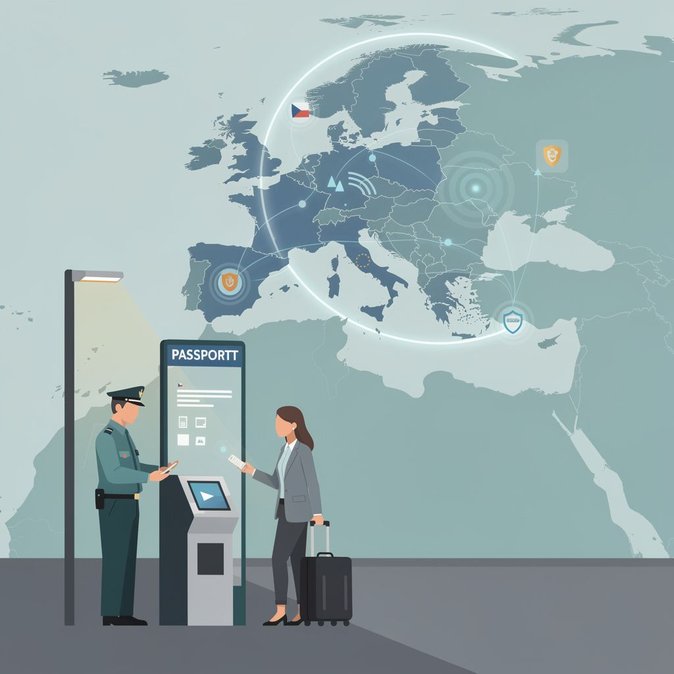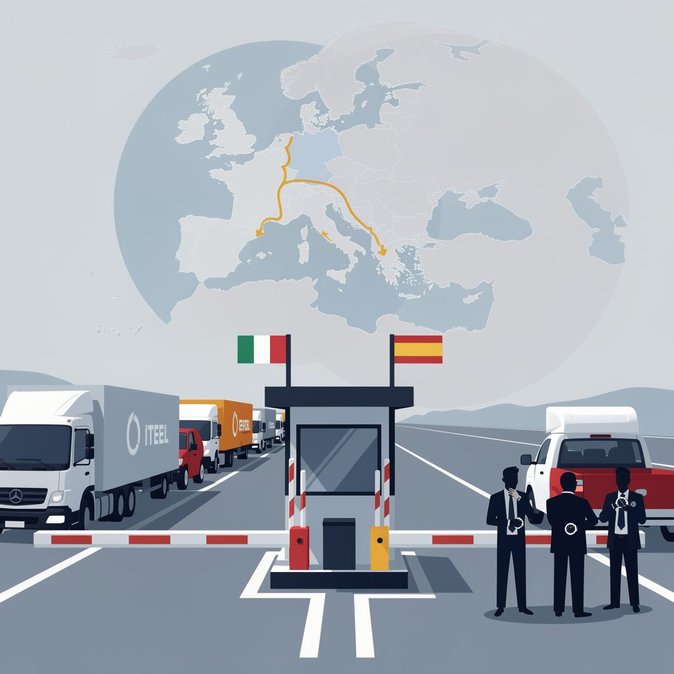
Speaking in the Italian Senate on 14 October, Prime Minister Giorgia Meloni described Rome’s decision to reinstate border controls with Spain for one week as a “routine instrument” available to all Schengen members. The measure was introduced after Spanish police warned of potential extremist plots targeting the 15–16 October European Council summit. While the suspension is narrowly focused, logistics firms in Czechia that route high-value electronics and automotive parts through northern Italy report delays of two to four hours on the Italian–French A10 corridor, where Spanish-bound trucks are being inspected. Czech hauliers have diverted some consignments via Germany and Béziers, adding up to €300 in fuel and toll costs per load. The episode revives memories of 2024, when Austria’s repeated controls on the Tyrolean crossings snarled Czech exports. Industry association ČESMAD Bohemia urged the Commission to clarify notification rules so that operators receive at least 48 hours’ notice. Under current Schengen rules, member states may reintroduce controls for up to 30 days in cases of “serious threats”, but advance warning is not legally required. For individual travellers, the impact is limited; airlines flying Prague–Rome and Prague–Barcelona routes report only minimal ID-check extensions. Nevertheless, Czech travel managers with employees transiting Italy by car or coach should verify route timings and carry passports even on intra-Schengen legs.
Source: Europa Press