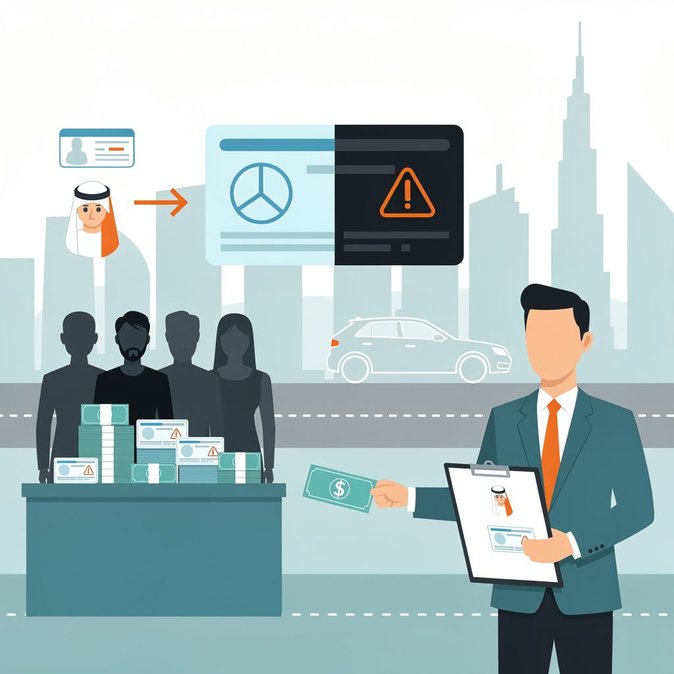
Dubai Police announced on 16 October that eight people were arrested for operating an illicit service that provided customers with driving licences issued by a neighbouring country for Dh10,000 a piece. Buyers who had never travelled abroad could then exploit reciprocal recognition rules to exchange the document for a UAE licence at the Roads & Transport Authority (RTA) without taking lessons or a test. The investigation—carried out by the General Department of Criminal Investigation in co-ordination with the Ministry of Foreign Affairs and the RTA—found that the suspects used front offices of transaction-processing companies to market the scam. Officers seized forged documents, cash and computer equipment used to generate false application records. Under UAE mobility regulations, holders of valid licences from 43 recognised jurisdictions can convert to a local permit after a simple eye test. The programme is designed to streamline relocation for qualified drivers arriving on employment visas. By inserting counterfeit foreign licences into the system, the gang undermined road-safety safeguards and exposed employers to vicarious liability if staff were involved in accidents. Legal experts note that anyone who knowingly obtains a forged foreign licence faces charges of fraud and can have both the fake and resulting UAE licences revoked. Companies are urged to audit employee driving-record files, particularly for fleet drivers and field engineers whose work permits hinge on holding a clean UAE licence. The case is the latest reminder that document-verification controls are an essential element of global-mobility compliance programmes. HR teams should mandate original-document sighting and, where possible, use the RTA’s electronic verification API before reimbursing licence-conversion costs for new hires.
Source: The National