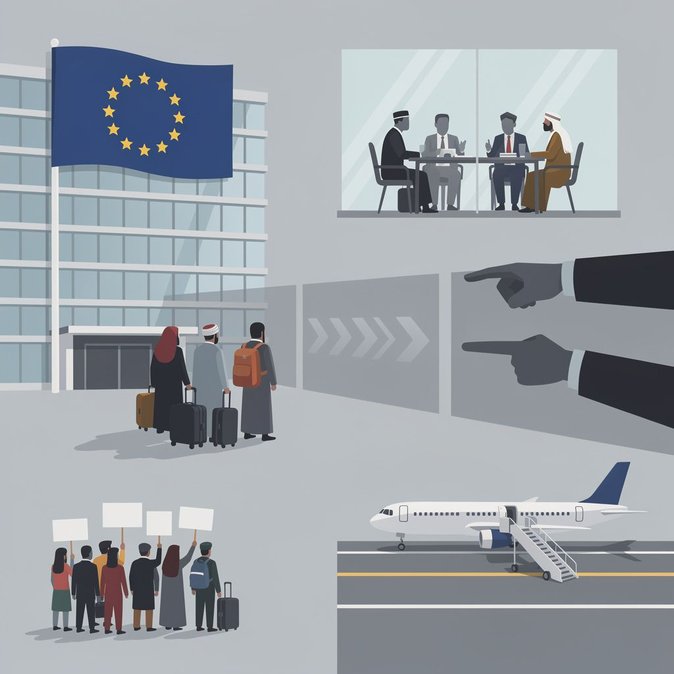
A Brussels Times investigation has confirmed that EU officials held a confidential meeting with a five-member Taliban delegation in a Brussels airport hotel on 23 June to discuss the logistics of deporting Afghan nationals who have exhausted legal remedies or been convicted of crimes. Details of the encounter emerged on 16 October after participants spoke anonymously to The New York Times, prompting fresh scrutiny at this week’s European Council summit in the Belgian capital. According to the leak, representatives from 15 EU countries—Belgium among them—asked the Taliban to accept charter flights carrying rejected asylum seekers in exchange for humanitarian aid and limited diplomatic engagement. The Afghan side requested direct development funding and the reopening of several EU member-state embassies in Kabul. Human-rights groups condemned the talks as a breach of the non-refoulement principle, noting that the Court of Justice of the EU ruled in 2024 that Afghan women face systemic persecution and should never be returned. Although the mooted deal would initially target male convicts, observers warn of a “slippery slope” that could see broader returns. Belgium’s State Secretary for Asylum and Migration insisted no agreement has been finalised and that any returns would require individual risk assessments. Nevertheless, lawyers say the prospect of forced returns is already deterring some Afghan nationals from applying for protection or from travelling outside Belgium for fear of detention at re-entry. For multinational employers, the episode underscores the importance of monitoring staff with Afghan citizenship who travel on Belgian residence permits: sudden policy shifts could impede their ability to re-enter the Schengen area. Mobility managers should also prepare for potential protests near EU institutions, which could disrupt access to offices in Brussels’ European Quarter.
Source: The Brussels Times