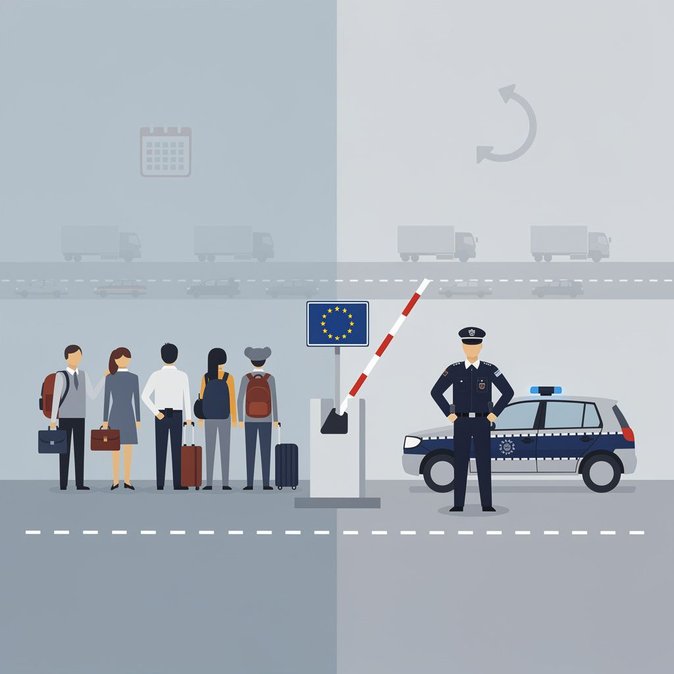
In a one-minute statement aired by MDR Aktuell at 03:00 on 16 October, Deputy Chair Manuel Ostermann of the German Police Union (DPolG) argued that the border controls Germany introduced in 2023 “must remain in place” to manage migration pressures effectively. Ostermann cited recent arrest figures and a drop in asylum applications at key crossings as evidence that the strategy works. The intervention comes as politicians across the spectrum debate whether to scale back the controls once the EU’s new Common European Asylum System is fully operational. Business associations complain about queuing times for commuters and delivery trucks, while hoteliers in border towns say spontaneous weekend tourism from neighbouring countries has fallen by up to 12 percent year-on-year. Ostermann’s remarks are likely to strengthen the hand of Interior Minister Dobrindt, who wants to prolong the checks until March 2027. Civil-liberties NGOs, however, warn that what began as a temporary measure after the 2023 surge is becoming permanent and risks normalising a patchwork Schengen area. For global mobility managers the key takeaway is regulatory uncertainty: travel rules within Europe can change with little notice, and the political climate still favours security measures over seamless movement. Employers should therefore keep close tabs on parliamentary debates and prepare employee communications for potential future extensions or modifications of the control regime.
Source: MDR