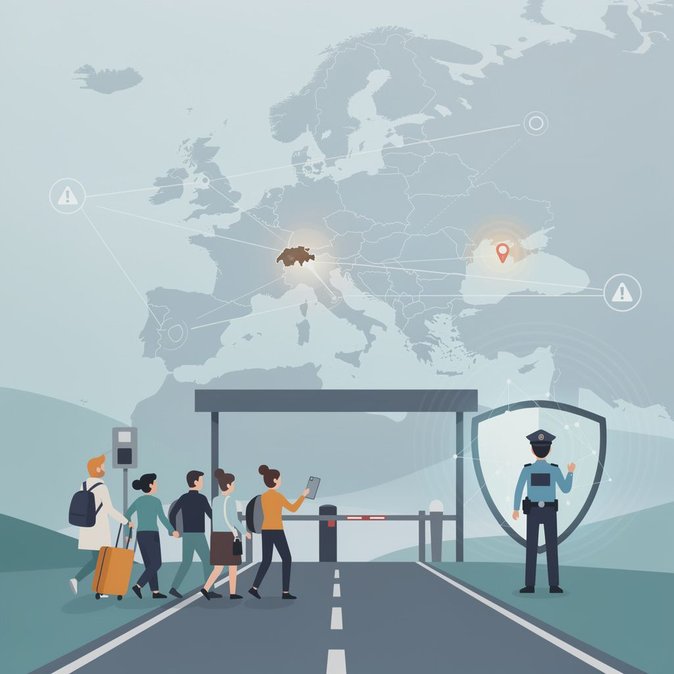
Brussels/Berlin – From 15 October the Schengen Information System (SIS) – Europe’s main border-security database – is able to store and circulate "information alerts" originating from trusted non-EU partners such as Interpol or third-country security agencies. The European Commission’s Directorate-General for Migration and Home Affairs confirmed the go-live on Thursday. Under the new feature, German federal police (Bundespolizei), Länder police forces and customs officers will receive real-time warnings when individuals linked to terrorism or serious organised crime are detected at any border crossing, airport or during an inland check. Previously, SIS mainly held EU-generated alerts (e.g., arrest warrants, refusals of entry, missing persons). By permitting vetted external data, the upgrade significantly widens the intelligence funnel – a long-standing demand of Germany’s Interior Ministry after the 2023 Berlin Christmas-market plot was foiled using Interpol data that never reached front-line officers. Europol will act as quality gatekeeper, ensuring that third-party records meet EU data-protection standards. According to the Commission, Member States will be able to flag additional biometrics, travel documents and modus-operandi details, enabling automated matches at e-gates and mobile devices. Germany has already completed the required software patch to its national SIS II copy; the Federal Office for Information Security (BSI) says no downtime for border controls occurred. For business travellers and mobility managers the change is invisible but important: more granular checks at external borders usually speed queues because officers can rely on automated matches instead of manual look-ups. However, travellers whose names resemble those on new watch lists may experience increased secondary screening. Companies should remind staff to carry consistent passport spellings and, where dual citizenship applies, to use one document consistently when entering Schengen. The information-alert roll-out is the last major milestone before the Entry/Exit System (EES) starts in May 2027 and comes as Germany maintains temporary controls at all land borders until March 2027. Together, the measures form a layered security regime that will shape cross-border mobility for years to come.
Source: European Commission – DG HOME