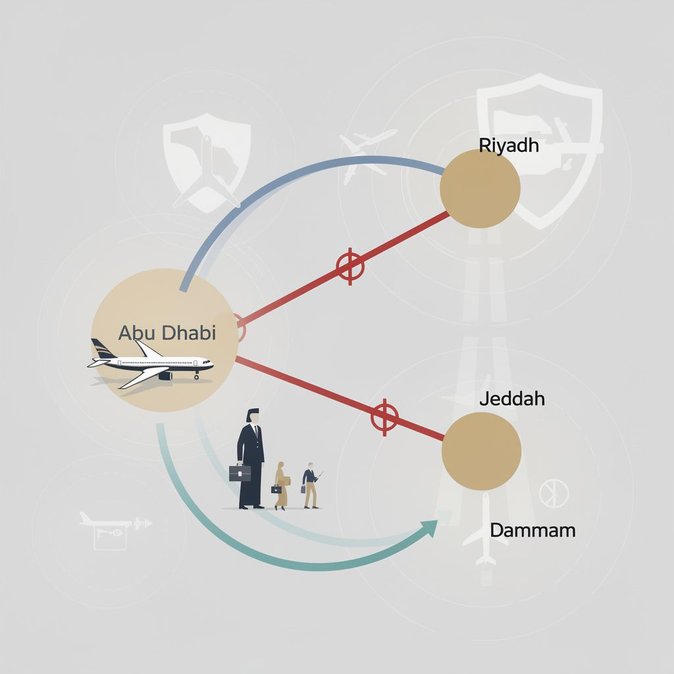
Etihad Airways has prolonged the suspension of services between Abu Dhabi and the Saudi cities of Riyadh, Jeddah and Dammam until Saturday, 24 October, citing the "dynamic security situation" in the Gulf. The airline initially halted flights after missile strikes on Riyadh airport earlier this month and says further timetable changes are possible. The extension means corporate travellers face a full working week of disruption. Government delegations attending the Future Minerals Forum in Riyadh have already re-routed via Kuwait or Bahrain, while supply-chain managers moving crew between UAE free-zone factories and partner plants in eastern Saudi Arabia must budget at least four additional hours for road transfers from Al-Ahsa or Bahrain. Etihad is offering free re-booking, refunds or onward travel on partner carriers where available. Abu Dhabi’s Zayed International Airport remains fully operational, but the General Civil Aviation Authority continues to coordinate NOTAMs on potential air-space restrictions. Travel-risk consultants advise companies to track staff movements through the Tawajudi e-portal and to verify insurance coverage for war-risk zones in neighbouring states. The episode underlines how quickly regional geopolitics can upend carefully planned itineraries. Firms with project teams shuttling between GCC capitals are reviewing contingency contracts with charter operators and pressing for multi-entry business visas to Oman and Qatar as alternative hubs. HR leaders are also reminding mobile workers to keep multiple blank passport pages and to check vaccination validity, as sudden rerouting often triggers fresh entry-health checks. While the UAE itself remains unaffected, the prolonged Saudi disruption highlights the importance of diversified routing strategies and robust traveller-tracking protocols for any organisation running Gulf-wide operations.
Source: Gulf News