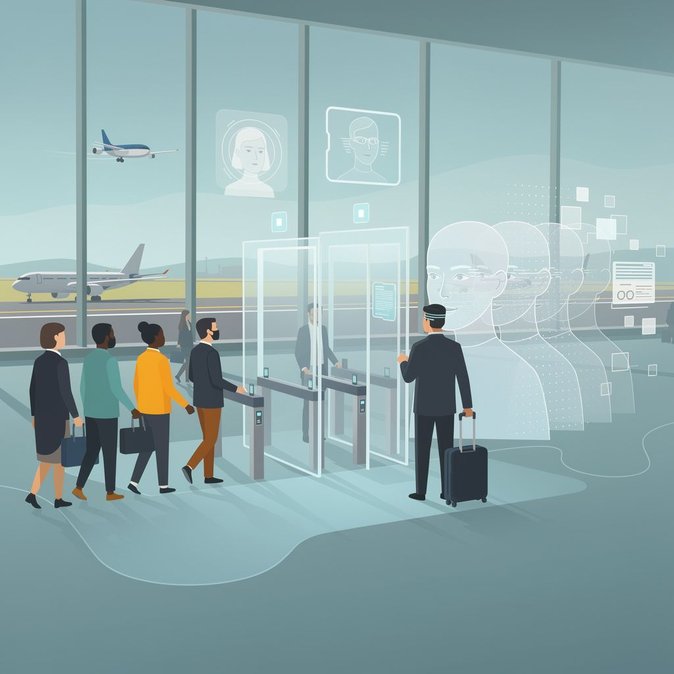
The Home Office’s long-trailed “contactless travel” programme moved from pilot to operational reality this month with the deployment of Amadeus Seamless Gate® technology at East Midlands Airport. From 6 October, British citizens arriving at the regional hub have been able to clear immigration simply by walking through a new portal that captures a live facial image and matches it to a pre-existing biometric record. Birmingham will follow within weeks, with another 11 major airports—including Heathrow and Gatwick—slated to upgrade by early 2027. The swap from passport-scanning eGates to passive facial comparison marks one of the biggest changes to UK border infrastructure in a generation. Airlines now transmit a gallery of passengers’ passport photos before the flight so that Border Force can run advance checks and pre-stage a “known-traveller” reference. When an eligible traveller approaches the gate, the camera performs a one-to-one match; a passport need only be shown if secondary inspection is triggered. Border Force director-general Phil Douglas claims the system processes passengers 25 per cent faster, reducing queue times and freeing officers for complex cases. Civil-liberties groups are less sanguine. The Home Office’s own Biometric Information Retention and Usage Policy (v5.0, August 2026) allows images of British citizens to be kept for up to 30 days, but permits the retention of non-UK nationals’ images for six years—and potentially 15 years if a traveller is detained or claims asylum. The same policy authorises secondary uses ranging from crime prevention to benefit-fraud checks. Critics argue that shifting from an opt-in passport scan to automatic capture removes meaningful consent and escapes the scrutiny of primary legislation. For employers and global-mobility managers the practical impact is twofold. First, passengers holding an Electronic Travel Authorisation (ETA) will increasingly expect “face-only” arrival with no passport presentation; firms should brief staff on carrying a passport for airline check-in even if it is not needed at the gate. Second, data-protection teams should note that employees’ facial biometrics may now sit in Home Office databases for most of a typical overseas assignment cycle. Organisations collecting travel data for duty-of-care purposes will need to update privacy notices accordingly. Commercially, the rollout cements Spain-based Amadeus as the prime contractor for UK border biometrics following its 2024 acquisition of Vision-Box. The company is now pursuing a €1.2 billion takeover of IDEMIA Public Security, signalling an even deeper push into government-scale identity infrastructure. Parliament has yet to debate whether such critical capabilities should depend on a single overseas supplier.
Source: TechTimes