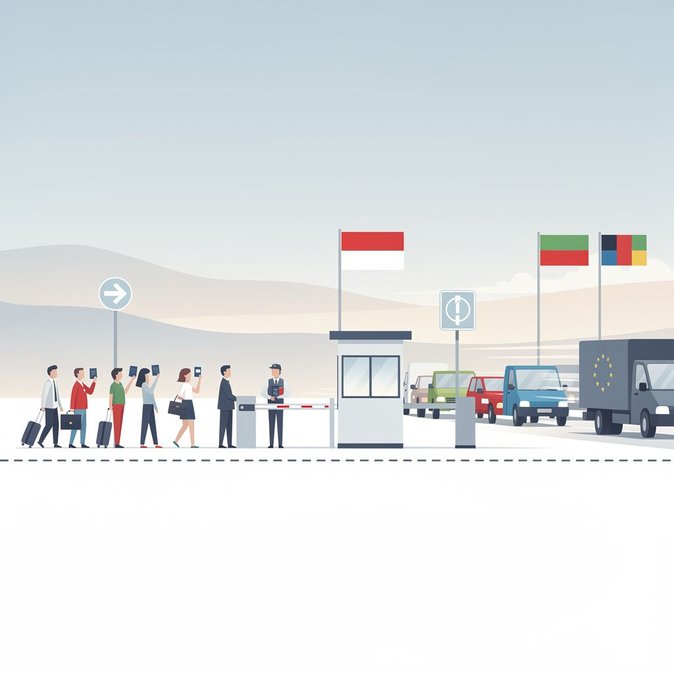
Austria’s Ministry of the Interior has quietly extended the temporary controls it re-introduced in 2015 at its land borders with Hungary, Slovenia, Slovakia and Czechia for a further six-month period that runs from 16 September 2026 to 15 March 2027. The measure, published in the Federal Law Gazette and confirmed by officials on 23 October, cites irregular migration on the Balkan route, Russia’s war in Ukraine and the security context in the Middle East as continuing risk factors. Passports and EU/EEA ID cards will therefore keep being checked at the main crossings and in a 20-kilometre ‘border zone’ where mobile patrols operate. The extension means Austrian hauliers and business travellers must continue to plan for occasional queues at crossings such as Nickelsdorf (A4) and Spielfeld (A9). Although the ministry argues that shifting some checks away from the physical frontier actually reduces waiting times, logistics associations report that spot controls inside the country can be unpredictable and complicate just-in-time deliveries. From a corporate-mobility perspective, the decision locks in additional compliance steps for cross-border commuters. Employees from neighbouring countries must continue to carry travel documents and allow buffer time when attending meetings in Vienna or Graz. International companies with plants in eastern Austria are adjusting shift schedules and advising suppliers to use alternative routes via Germany or Italy where possible. Politically, Vienna’s move contrasts with Spain and Italy, which ended their own temporary Schengen checks this week, and increases pressure on Germany and France to justify their internal controls to Brussels. The European Commission is expected to revisit the proportionality of Austria’s prolonged checks in its next ‘State of Schengen’ report. For mobility managers, the practical takeaway is clear: do not assume Schengen’s passport-free travel automatically applies when routing staff through Austria during the coming winter. Advance document checks, real-time traffic apps and A1 or ATA carnets for goods in transit remain essential risk-mitigation tools.
Source: Nachrichten.jetzt