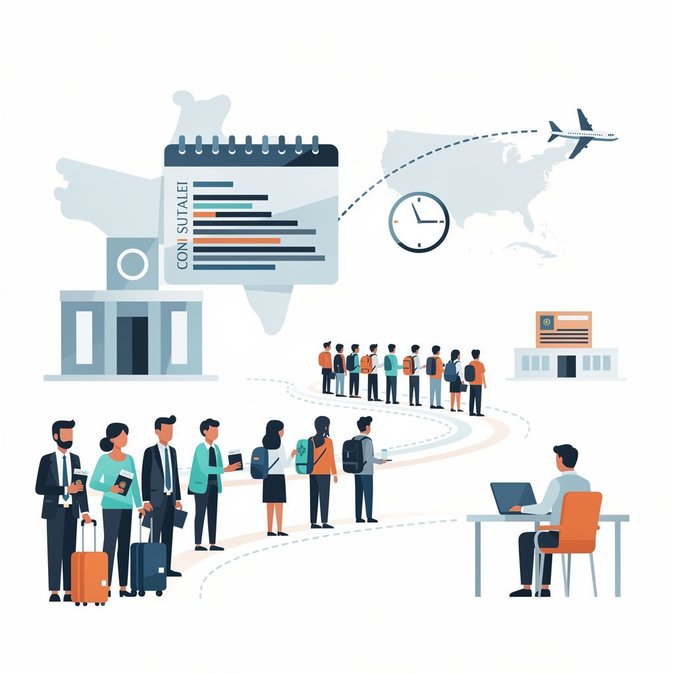
The latest figures from the US Department of State’s Global Visa Wait Times tracker, released on 21 October and reported by Business Today on 23 October, paint a sobering picture for Indian travellers. Applicants for B-1/B-2 visitor visas now face an estimated 12-month wait for the next available interview slot at the US consulate in Mumbai, 11 months in New Delhi and 10.5 months in Hyderabad. The queue is shorter—but still lengthy—for employment and student categories; H/L/O/P/Q applicants in Hyderabad, for example, are looking at 6.5 months while F/M/J student-visa seekers there can potentially secure an appointment within four weeks. Although the figures are snapshots rather than guarantees, they have practical consequences for businesses scheduling sales trips, technical installations or client meetings in the United States. HR and travel teams must now work backwards from the intended start date, building in not only the interview wait but also the post-interview processing time and possible administrative processing. The sharp divergence between cities underscores the importance of strategic venue shopping: Chennai’s 7.5-month B-1/B-2 wait and Kolkata’s one-month work-visa wait offer relative relief. US consular officials continue to release ad-hoc appointment batches; therefore applicants who already hold a slot should monitor the scheduling portal daily for an earlier date. For Indian companies sending short-term assignees under the L-1 blanket programme, the continued backlog has revived interest in Canada-consulate filings under third-country national rules, though availability north of the border is also tightening. Frequent travellers with valid visas are reminded that interview-waiver renewals remain available up to 48 months after expiry and are processed much faster. Looking ahead, US officials say the department aims to return worldwide visa operations to pre-pandemic volumes by the end of FY 2027, but concede that India’s pent-up demand will keep appointment pressures high well into 2028. Employers are therefore encouraged to explore alternative deployment models—remote intake, ESTA-qualified meetings in third countries, or shifting events to locations where Indian nationals enjoy visa-on-arrival access.
Source: Business Today