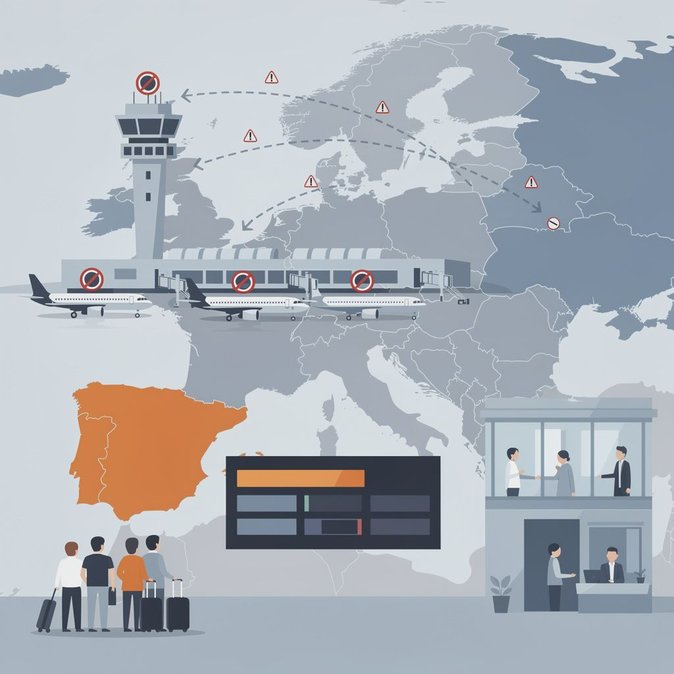
A nationwide 24-hour general strike in Spain on 11 November 2026 disrupted air, rail and public services and led airlines to axe at least 234 of the day’s 4,500 scheduled flights by 10 a.m. German travellers felt the impact immediately: Lufthansa scrapped its morning Madrid–Berlin rotation and one of two daily Madrid–Frankfurt services, while Eurowings and Swiss trimmed frequencies on holiday routes to the Balearics and Canaries. Travel portal Reisetopia counted more than 50 cancellations on routes touching German airports before noon. Cause and scope: Spain’s two largest unions, UGT and CCOO, called the strike to demand real-wage protection and job-security clauses in 2027 collective bargaining. Ground-handling staff, air-traffic technicians and baggage-system engineers joined the walkout, forcing Aena to activate minimum-service decrees (39-64 % of international flights had to operate). For German corporates with Iberian subsidiaries the timing was awkward: many had booked last-minute trips around the 14-15 November South European Tech Forum in Barcelona. Several delegations rerouted via Marseille or Toulouse and took trains across the border, adding five hours to journey times. Rights and remedies: Under EU261/2004, a general strike counts as an “extraordinary circumstance,” so airlines are exempt from compensation but must re-route or refund passengers. Duty-of-care obligations still apply; firms should ensure staff receive hotel accommodation and updated itineraries. Travel managers should also note that Germany’s airport security settlement (see story #1) does not shield itineraries from foreign labour unrest. Looking ahead: Spanish unions warned of another 48-hour action around Epiphany if talks stall. Lufthansa Group says it will publish a fresh waiver code applicable to tickets issued in Germany for travel to Spain between 5-10 January 2027. Companies with frequent Iberia-Germany traffic may wish to consider resilient routing via Lisbon or southern France.
Source: Reisetopia