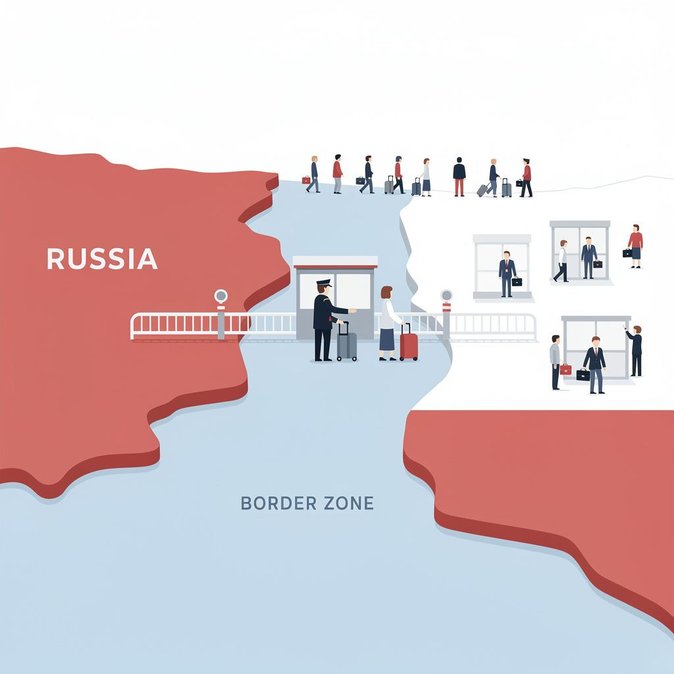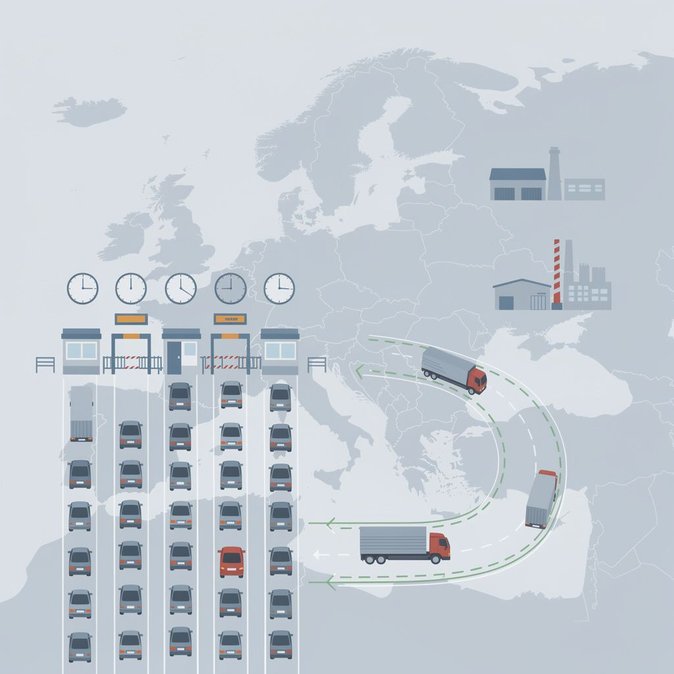
Real-time data from the crowdsourced platform KolejkaNaGranicy.pl show that holiday traffic has pushed wait times at several Polish border posts to their highest levels since the summer rush. At 09:30 CET on 12 November, cars entering Poland at Medyka–Shehyni on the Ukrainian frontier faced queues of five hours and 39 minutes, while trucks leaving Poland for Germany via Gubin–Guben waited 45 minutes. The spike follows Poland’s 11 November Independence Day, which creates a long weekend for many travellers returning from family visits in Ukraine and shopping trips in Germany. A ban on lorries over 12 tonnes during the public holiday ended at midnight, releasing a backlog of freight vehicles onto key corridors such as the A4 and E40. For logistics planners the figures underline the importance of dynamic routing. Alternative crossings further north, notably Dorohusk–Yahodyn and Budomierz–Hrushiv, were reporting waits of 15–30 minutes – a reminder that distributing loads across multiple checkpoints can cut idle time. Passenger-car drivers are advised to travel overnight, when queues typically shrink below one hour. The Border Guard has deployed additional officers and mobile passport-control booths but warns that German and Lithuanian spot checks – re-introduced earlier this year to curb secondary migration – can add unpredictable delays. Businesses moving time-sensitive goods, such as just-in-time automotive components, should factor buffer windows of up to six hours into delivery schedules until traffic normalises mid-week.
Source: KolejkaNaGranicy.pl