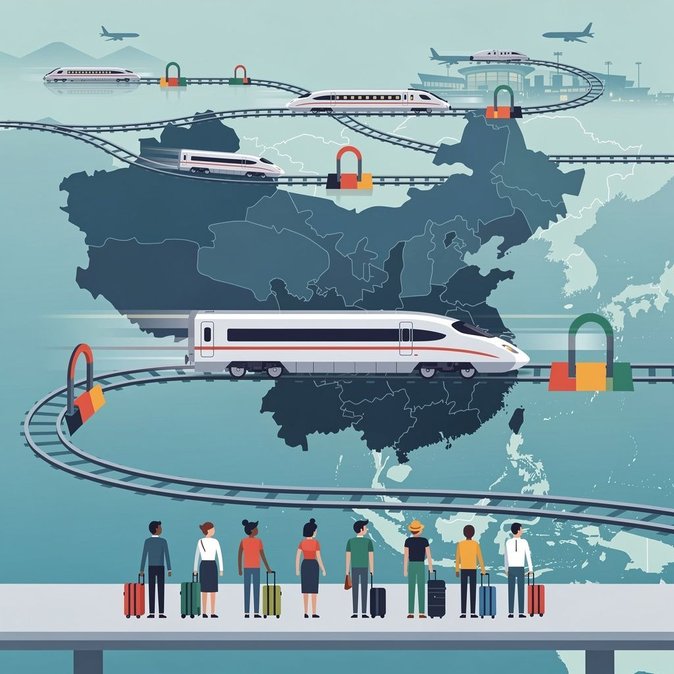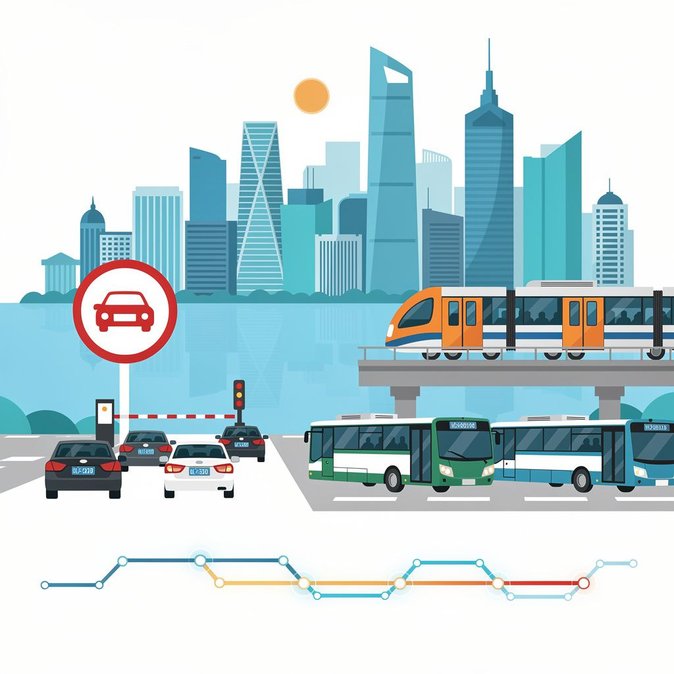
With the 33rd APEC Economic Leaders’ Meeting set for 18–19 November, Shenzhen authorities on 13 November released three coordinated notices covering road restrictions, metro operations and bus capacity. The city aims to balance security requirements with the needs of its 18-million residents and the influx of 10,000 delegates, media and support staff. 1. Road access curbs for out-of-town cars. From 17 to 20 November, 06:00–22:00 daily, passenger vehicles that do not carry Shenzhen licence plates will be banned from six central districts—Futian, Luohu, Nanshan, Bao’an, Longgang and Longhua. Exemptions apply to buses, accredited summit vehicles, emergency services and Hong Kong/Macau cross-border plates within their reservation window. Police will use 420 automatic-number-plate-recognition cameras for enforcement. 2. Spot road closures near venues. Separate police guidance lists deep-rolling closures on 9 key arterial roads—including sections of Shennan Avenue—during leaders’ motorcades: 18 November 16:00–22:00 and 19 November 06:00–14:00. Detailed diversion maps were published via “Shenzhen Release” and syndicated across Chinese navigation apps in real time. 3. Public-transport sweeteners. To encourage residents to leave private cars at home, the Transport Bureau announced that all metro and city-bus rides will be half-price between 16 and 20 November. Metro lines 1, 2, 5 and 11 will run until 01:00, with 56 temporary shuttle routes linking hotels, convention centres and airports. Operators expect an extra 1.2 million daily passengers but say additional rolling stock and platform marshals will keep dwell times under 50 seconds. 4. Advice for mobility managers. Companies moving staff or equipment into Shenzhen should apply for summit vehicle passes by 15 November and schedule critical deliveries outside the restricted windows. Employee communications should stress the half-fare incentive and highlight that some ride-hailing pick-up zones near the Qianhai CEO Summit venue will be suspended. Strategic context: This is the first time since 2014 (Beijing) that China hosts the APEC leaders’ meeting. The measured, data-driven approach—targeted restrictions, transparent diversion maps and fare discounts—reflects lessons learned from Beijing and Hangzhou G20 events, where blanket bans drew public criticism. Mobility experts will watch whether the policy mix keeps both delegates and local commuters moving smoothly.