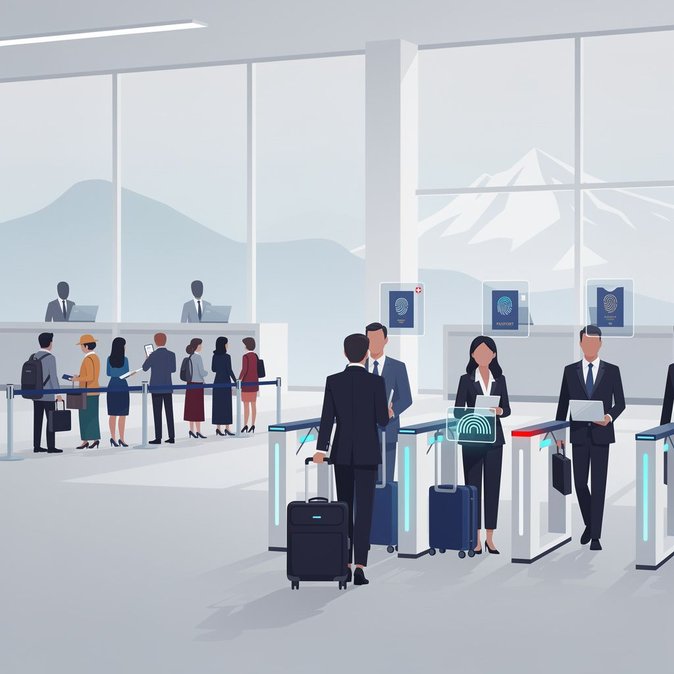
Swiss Federal Councillor Beat Jans brought together senior officials of the State Secretariat for Migration (SEM), Zurich and Geneva airports, SWISS, easyJet and ground-handling companies on 13 November to tackle a problem that has increasingly frustrated travellers and airlines alike: long immigration queues created by the EU’s new biometric Entry/Exit System (EES). The high-level meeting, reported on 14 November, reviewed the first year of EES operations and agreed that targeted technological fixes are needed before the ski-season rush reaches its peak. EES has already logged more than 225 million crossings by 90 million third-country nationals and refused entry to over 78 000 people across Schengen. While the database is praised for closing security gaps, Swiss airports report that the extra biometric capture and mandatory interview step can push waiting times for non-EU passengers beyond 60–90 minutes at peak periods, jeopardising tight connecting flights and adding cost for carriers. To relieve the bottleneck, participants discussed creating a “National Facilitating Programme” (NFP). Frequent travellers from trusted countries would volunteer for a one-time background check in advance; once cleared, they could use automated E-Gates without an interview, similar to programmes such as Global Entry in the United States. Border police say the scheme could trim the average processing time for eligible passengers to under 30 seconds. Airlines estimate that shifting even 15 % of eligible travellers to an NFP fast lane could save more than 2 000 crew-delay minutes per month at Zurich, reduce missed connections and cut minimum connection times for intercontinental itineraries. Airport operators stressed, however, that any roll-out must be harmonised with neighbouring Schengen states to avoid creating conflicting rules for transit passengers. For business travellers the message is clear: until an NFP or similar trusted-traveller scheme is in place, third-country nationals should build extra time into itineraries, make sure passports are machine-readable and have supporting documents ready for EES interviews. Companies moving assignees to Switzerland may also want to brief staff about potential delays when returning from trips outside Schengen.
Source: ImTicker