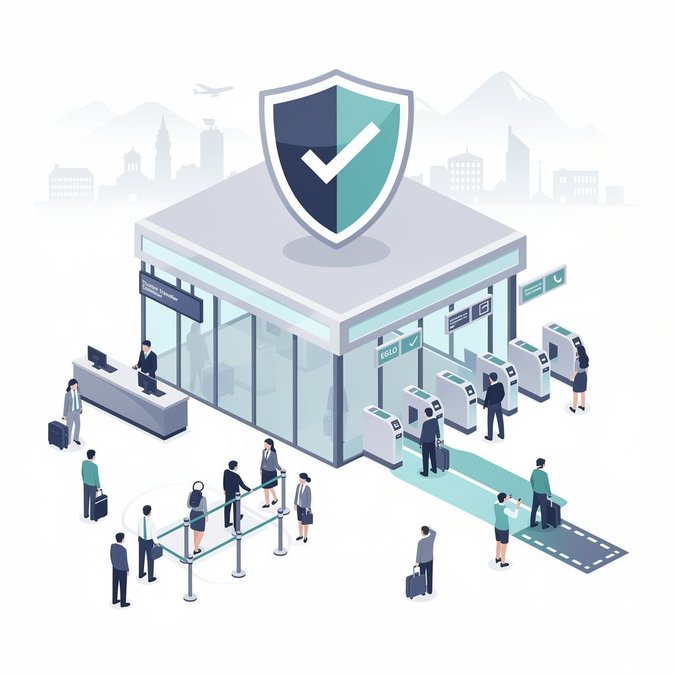
Swiss Federal Councillor Beat Jans met today (13 November 2026) with senior executives from Zurich, Geneva and Basel airports, Swiss International Air Lines, ground-handling companies and the Border Guard Corps to examine why passport queues have lengthened since Switzerland introduced the EU Entry/Exit System (EES) in October 2025. The stakeholders confirmed that the combination of full biometric capture and a mandatory interview for many third-country nationals has pushed peak-hour processing times well beyond pre-EES levels at all three national gateways. EES, which automatically records every entry and exit of non-EU/Schengen travellers, has already logged more than 225 million crossings and generated 78 000 refusals across the Schengen area in its first year. While the system is credited with detecting overstayers and security risks, airlines warned that banks of manual booths and insufficient e-gates are creating knock-on delays for flight departures and missed connections, hurting Switzerland’s reputation as an efficient hub for time-critical business travel. One option tabled today is a “National Facilitating Programme” (NFP) that would allow vetted frequent travellers—such as executives from the UK, US and key growth markets—to undergo a one-time background check and biometric enrolment. Similar to the US Global Entry model, NFP members would then be directed to dedicated e-gates without the interview step, potentially slashing average processing times from eight minutes to under three. The Federal Office of Customs and Border Security will report on legal feasibility and data-protection safeguards by February 2027. Airport operators also pledged to expand infrastructure ahead of the 2027 ski-season rush. Zurich will add four e-gates in Dock E and convert two staffed booths in Dock B, while Geneva will re-configure queuing zones to separate Schengen, EES and crew flows. Longer-term, Bern is considering financial incentives for airports that meet agreed service-level benchmarks. For multinational companies, smoother border formalities could translate into fewer duty-of-care incidents, lower travel-delay costs and a competitive edge for Switzerland as a regional HQ location. Yet, business-travel managers should advise non-EU employees to allow at least 30 minutes extra at passport control until concrete measures are implemented—likely not before summer 2027.