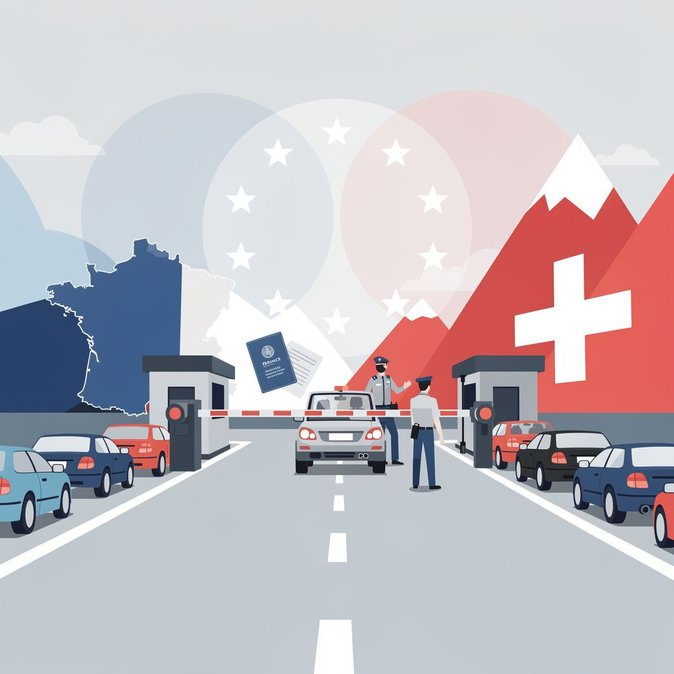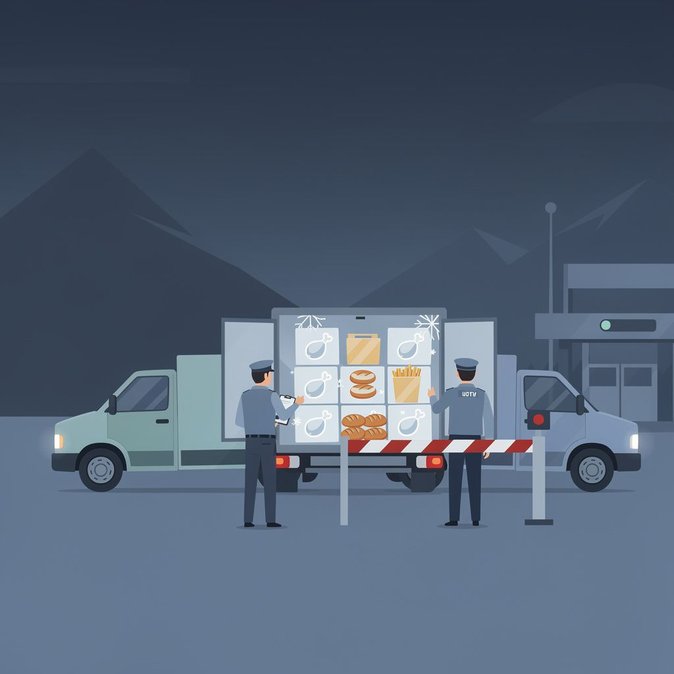
Swiss border officials have intercepted one of the largest food-smuggling attempts of the year, confiscating more than two tonnes of frozen chicken, French fries and flatbread that were being transported in unrefrigerated vans. According to a 23 October media release from the Federal Office for Customs and Border Security (FOCBS/BAZG), the hauls were made during separate night-time stops in Ederswiler (canton Jura) and Pratteln (canton Basel-Land). In the first case, a Swiss-registered car entering from France was found to contain 162 kg of poultry, 258 kg of fries and 128 kg of flatbread—none of it declared and all of it without the legally required cold chain. Just over two hours later, a second patrol stopped a Basel-registered delivery van that had crossed from Germany; officers discovered 1.5 tonnes of fries and 632 kg of bread stacked on pallets, with the vehicle overloaded by nearly a metric tonne. Both loads were confiscated on public-health grounds and the drivers were fined on the spot for unpaid duties and, in the second case, for overloading. Because the smugglers could not pay the five-figure penalties immediately, the authorities seized the van as collateral. FOCBS noted that food smuggling poses growing health risks as small traders seek to avoid Switzerland’s higher import duties and stricter veterinary checks. For companies that operate catering supply chains into Switzerland—particularly for cross-border events or temporary project sites—the incident is a timely reminder that Swiss customs apply food-safety rules as rigorously as fiscal ones. Logistics managers should ensure that waybills match load contents, that perishable goods meet Swiss refrigeration standards, and that drivers carry sufficient funds or customs guarantees to cover potential duties. Failure to comply can lead not only to confiscation but also to costly project delays if vehicles are impounded. The operation also underscores FOCBS’s broader strategy of risk-based, high-impact controls as digitisation of routine declarations frees agents to focus on suspicious consignments. With winter holiday traffic about to swell on north–south transit routes, mobility planners can expect more spot checks on vans and minibuses that look like they may be carrying undeclared goods or irregular migrants.