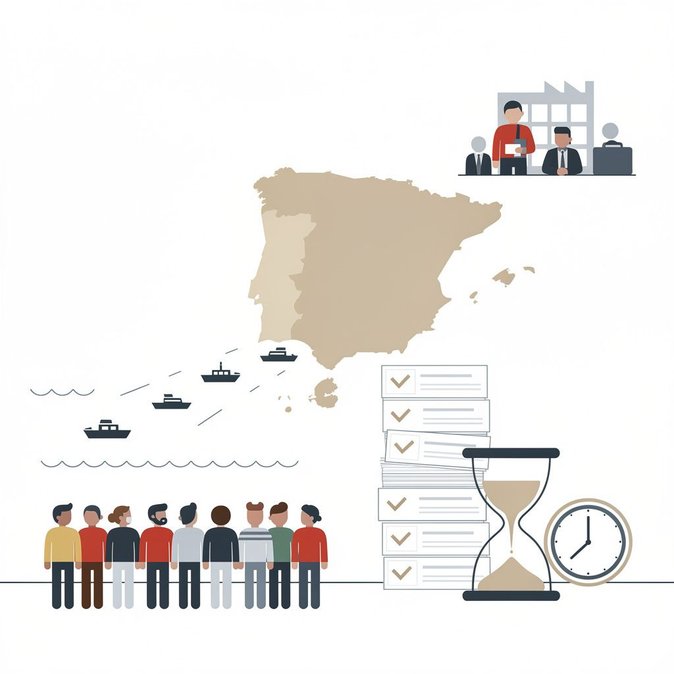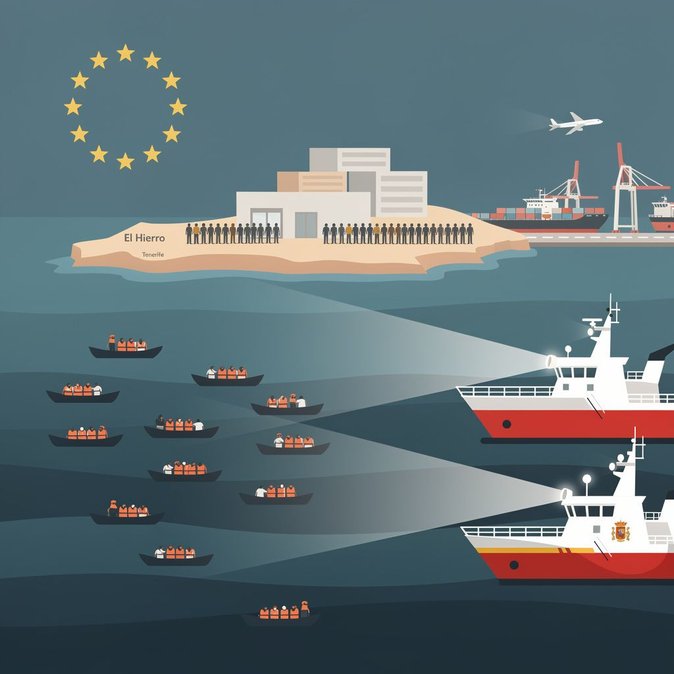
Spain’s Atlantic migration route set a grim new milestone over the weekend. Between 00:00 and 23:59 on Saturday, November 14-15, Salvamento Marítimo and Guardia Civil patrols intercepted 15 wooden cayuco boats carrying 1,580 people off the coast of El Hierro, La Gomera and Tenerife. According to port authorities quoted by The Olive Press, eight rescue craft worked continuously through heavy swells, transferring exhausted passengers—many dehydrated after a week at sea—from Senegal, The Gambia and Mauritania. The previous daily record of 1,461 rescues on this route had stood since 7 November 2020. Local officials say the humanitarian infrastructure on El Hierro—a volcanic island of just 11,500 residents—is at breaking point. Approximately 1,600 migrants remain in makeshift reception centres, while hundreds more were bussed to Tenerife overnight to free space for new arrivals. Territorial-policy minister Ángel Víctor Torres, visiting the port of La Restinga, acknowledged residents’ frustration, promising that Spain’s recently-approved €15.18 million emergency package would finance extra reception beds, a second Salvamar rescue launch and additional Guardia Civil officers by early December. The weekend surge underscores a dramatic shift in flows. Arrivals to the Canary Islands fell 67 % in the first half of 2026 but have rebounded sharply since October as calmer seas, political unrest in Senegal and reduced West-African coastal patrols create a “perfect corridor” for smugglers, migration researchers at the Universidad de La Laguna told local media. More than 27,000 people have now landed in the archipelago this year—already eclipsing the 2025 total—with El Hierro alone receiving an unprecedented 17,000. For companies sending staff to the Canaries—whether hotel engineers, construction supervisors or IT technicians supporting the islands’ data-centre boom—the spike means longer passport-control queues, heavier police presence and frequent road closures around key ports and airports. Business-travel managers should advise travellers to allow extra transfer time and keep a printed copy of hotel bookings; police are conducting random checks to ensure scarce accommodation is not being diverted from vulnerable arrivals. Employers with project workers on El Hierro may also face short-notice ferry cancellations as vessels are requisitioned for inter-island transfers. Policy-wise, the record-setting day adds urgency to regional president Fernando Clavijo’s demand that Madrid formally request Frontex rapid-border assistance and activate the EU’s solidarity-relocation mechanism. Until that happens, local authorities warn that over-stretched health and reception services will rely on ad-hoc transfers to the mainland—an approach that could spread operational disruption to other Spanish regions over the coming weeks.
Source: The Olive Press