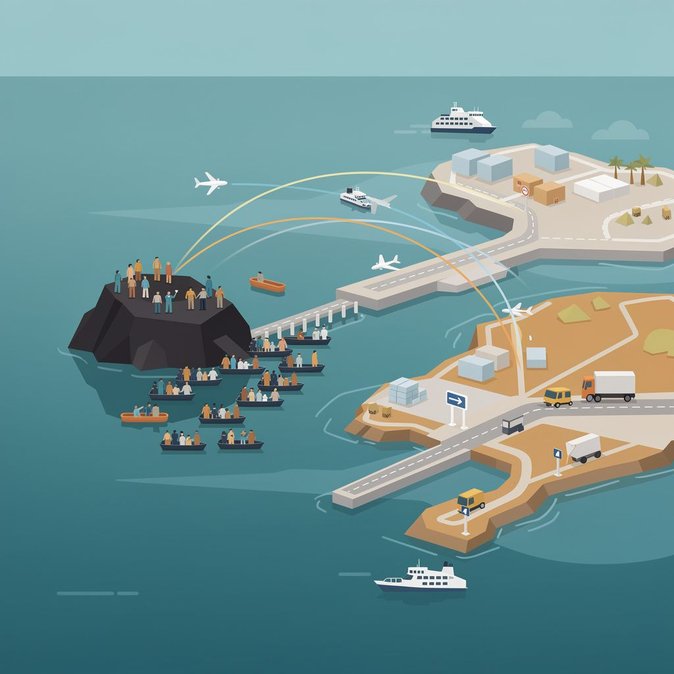
Barely 24 hours after setting a record for rescues, Spain’s smallest populated island faced another influx. Between dawn and 17:40 on Sunday, November 15, Salvamento Marítimo guided six more cayucos carrying 993 people into the ports of La Restinga and La Estaca. Five of the vessels held between 60 and 288 passengers each; the sixth arrived while counting was still under way. Local authorities immediately activated a contingency plan to move 900 people off the island before nightfall. Island president Alpidio Armas told Cadena SER that El Hierro’s temporary reception centre, a sports hall and Red Cross tents were hosting 1,606 people—quadruple their intended capacity—before the latest landings. A chartered Naviera Armas ferry and Air Europa flight transported families to Tenerife and Gran Canaria, where larger CATE facilities can process documentation and medical screening. Logistically, the transfers are delicate: each bus convoy requires police escorts, on-board translators and rapid antigen medical checks. For tour operators and corporate-shuttle providers, road closures along the HI-2 coastal highway caused 30-minute delays on Sunday evening. Dockside congestion also forced the suspension of inter-island freight for eight hours, according to port-authority notices. Armas urged the central government to repair a damaged harbour crane so that abandoned cayucos—now clogging berths—can be removed, stressing that the backlog hampers both rescue operations and commercial fishing. He also reiterated calls for diplomatic outreach to Senegal, which accounts for an estimated 90 % of recent departures. The operational takeaway for mobility managers: expect rolling disruptions on El Hierro for at least the next week and verify ferry schedules twice daily; vessels may be requisitioned with minimal notice to move migrants to Tenerife or the mainland.
Source: Cadena SER