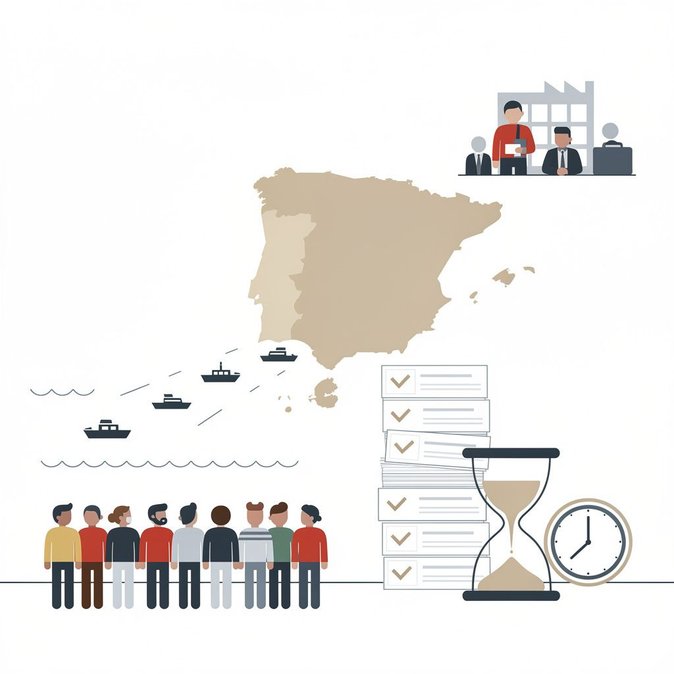
Spain’s maritime-rescue service confirmed on Sunday that it had assisted 2,198 people in 48 hours—1,324 on Saturday and 874 on Friday—setting the second-highest weekend total on record for the Atlantic corridor. Most rescues occurred off El Hierro, but interceptions were also logged near Gran Canaria and Tenerife. Officials note the figure is close to the daily record of 1,461 rescues registered in November 2020. Interior-ministry data show more than 13,000 of the 28,000 irregular maritime arrivals to Spain between January and October chose the Canary route, despite it being one of the world’s deadliest sea crossings. Mauritania remains the chief departure point, although recent boats left from as far south as Guinea-Bissau, stretching rescue resources and complicating diplomatic engagement. Madrid declared a “migratory emergency” for the islands last Tuesday, freeing fast-track budget transfers and allowing state agencies to override normal procurement rules for housing, transport and healthcare contracts. Procurement specialists in multinationals should watch the BOE for emergency tenders—particularly for modular accommodation and charter transport—that may present subcontracting opportunities or, conversely, drive up local hotel prices. Politically, the numbers land two weeks before Spain’s 29 November general election, handing hard-line opposition parties fresh ammunition and forcing the caretaker government to demonstrate control. Analysts expect renewed debate over reviving Spain’s 2006 “Frontera Sur” cooperation model with Senegal and Gambia, which funded joint maritime patrols and rapid-return flights. For global-mobility teams relocating staff to Spain’s mainland, the short-term impact is minimal, but if reception sites overflow and transfers accelerate, internal flights from the Canaries to Madrid and Barcelona could experience seat-blocking by the state, reducing last-minute availability.
Source: Associated Press