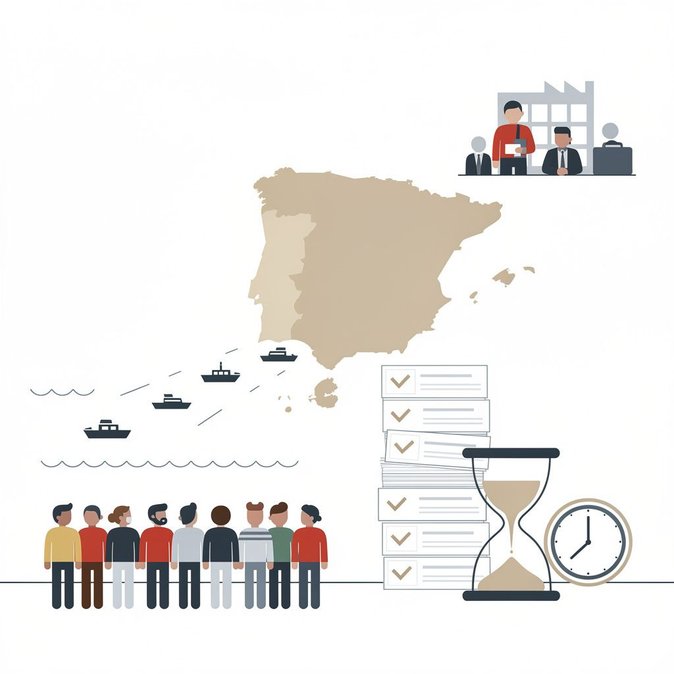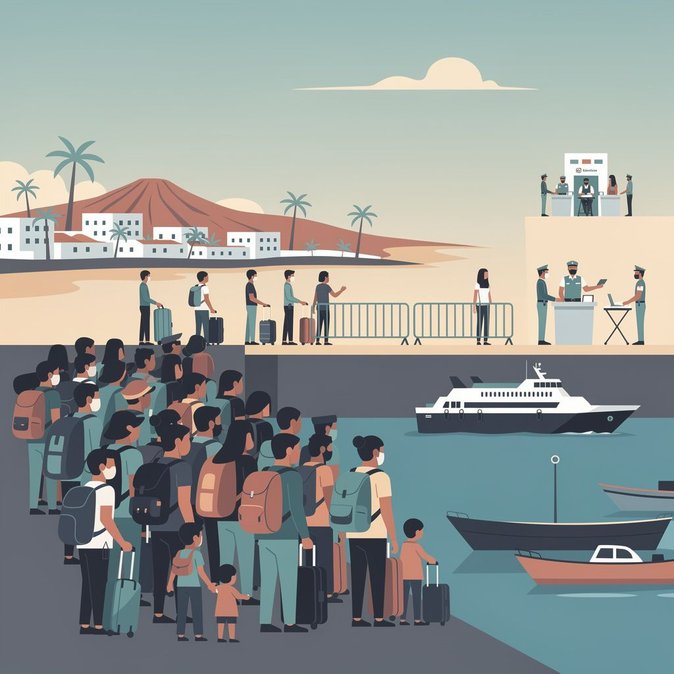
Spain’s Interior Ministry confirmed on Sunday that 29 small boats carrying roughly 2,200 people arrived across the Canary archipelago within two days, the largest single-weekend influx this year. Most vessels landed on El Hierro and Tenerife after favourable Atlantic currents and calm seas aided departures from West Africa. The arrivals push the islands’ 2026 total past 28,000—already double 2025 levels—and revive memories of the 2006 “cayuco crisis.” The regional government has activated emergency-accommodation protocols, commandeering sports halls and tourist bungalows during the low season. Spain is transferring the most vulnerable groups—pregnant women, minors and medical cases—to mainland facilities, but reception NGOs warn that identification and asylum processing backlogs could hit ten days, well above the 72-hour legal limit. For companies relocating staff to the Canaries’ growing tech and renewable-energy clusters, the humanitarian surge translates into practical hurdles: overstretched police take longer to issue NIE tax numbers, ferry schedules are being reshuffled to carry additional security personnel, and hotel availability around Puerto de la Estaca is tightening as rooms convert to temporary shelters. Politically, the spike sharpens pressure on Madrid ahead of the 29 November general election. Opposition parties blame the government for scrapping the 2025 maritime-surveillance drone pilot, while ministers argue that EU solidarity mechanisms—recently expanded to fund charter flights for voluntary returns—must be triggered. Multinationals should monitor the situation if assignment planning involves the Canaries. While the migration route poses no direct threat to visitors, periodic port closures and roadblock protests have occurred in past surges, affecting business-travel logistics.
Source: Associated Press