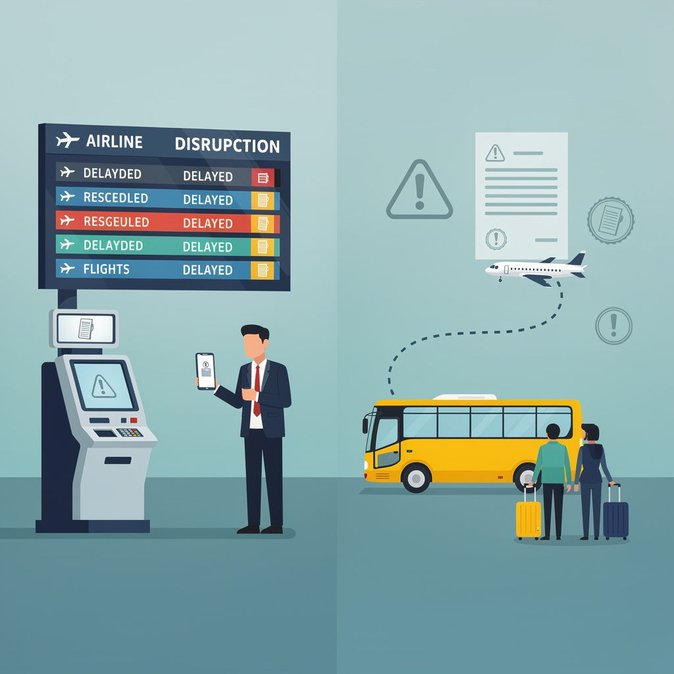
Brazil’s National Civil Aviation Agency (ANAC) has quietly published another package of amendments to Resolution 400, the regulation that governs airlines’ obligations toward passengers when flights are delayed, cancelled or rescheduled. A policy bulletin circulated to travel agents by LATAM Airlines on 18 November confirms that, effective immediately, carriers must warn customers at the time of purchase that the itinerary may suffer “involuntary changes” and spell out—on the same screen—their rights to re-routing, rebooking, refunds and expense reimbursement. The wording, layout and font size of the warning need to follow a new ANAC template, and airlines that sell through global distribution systems have 30 days to adapt their channels. For corporate travel managers, the biggest practical change is the introduction of a mandatory ground-transport alternative on domestic-to-domestic journeys when a same-day air connection cannot be offered. Airlines may now place passengers on inter-city coach services, provided the bus departs within 24 hours of the original flight and the traveller receives an electronic form to claim back any out-of-pocket costs. The measure is meant to avoid hotel-night accumulation at congested hubs such as São Paulo/Guarulhos and Brasília while giving companies predictability on duty-of-care expenses. The overhaul also standardises the treatment of combined domestic–international tickets that originate in Brazil. If the first leg is delayed enough to jeopardise the onward connection, carriers must absorb hotel and meal costs until a new itinerary is confirmed, even when the long-haul segment is operated by a partner airline. This closes a long-criticised loophole that left many business travellers stranded between codeshare partners. Non-compliance will trigger fines that start at BRL 140,000 (about USD 29,000) per incident and may reach BRL 3 million in cases of “collective impact”. ANAC inspectors will use mystery-shopping exercises to verify websites and app flows; the agency says it plans 300 spot-checks in the first quarter of 2027. Companies that outsource self-booking tools must ensure their technology provider incorporates the new pop-up language. Travel-risk advisers recommend updating pre-trip briefings and traveller tracking dashboards to reflect possible surface segments and longer door-to-door times. Human-resources teams sending assignees to secondary cities—especially in the Amazon and Northeast—should brief employees on coach-service standards and allow additional rest time on arrival. While the regulation increases transparency for passengers, it will require airlines, TMCs and corporates to re-map their disruption workflows over the next month.
Source: LATAM Trade