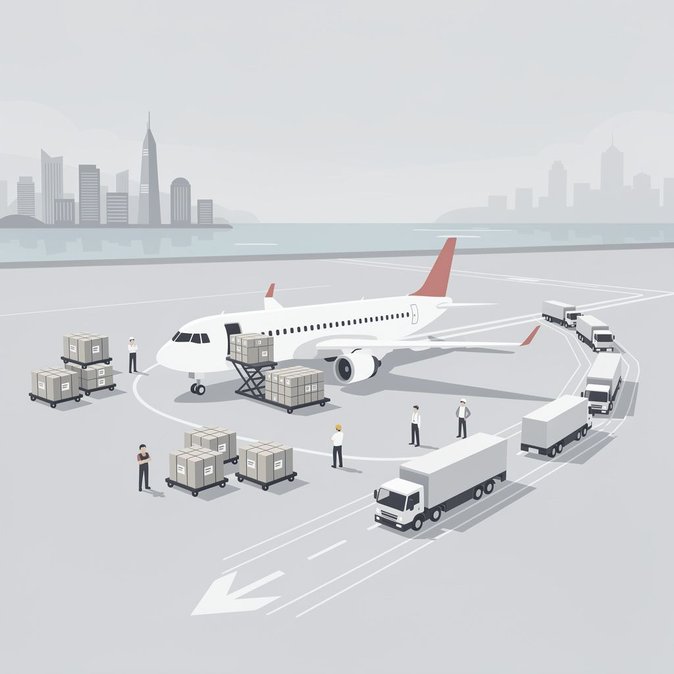
International shippers moving goods through South China will have to contend with a temporary ban on belly-hold cargo at Shenzhen Bao’an International Airport (SZX) that took effect on 18 November and will run until 18:00 local time on 20 November 2026. A customer advisory issued by Australian logistics giant Toll Group confirms that, under measures imposed for the APEC Economic Leaders’ Meeting, **all international passenger flights are barred from accepting freight**, while domestic passenger capacity has also been pared back to make room for VIP movements. Freighter operations remain technically possible, but airport resources are stretched. Forwarders report that ground handlers are giving priority to diplomatic charters and that ad-hoc security sweeps are slowing export build-up and import breakdown. The controls coincide with a city-wide ban on dangerous-goods vehicles and selective road closures in Futian, Luohu and Nanshan districts, creating a cascade of first- and last-mile delays as truckers are forced onto secondary routes. For manufacturers in the Pearl River Delta that rely on time-critical air cargo for high-value electronics and e-commerce parcels, the three-day embargo is painful. Spot rates ex-Shenzhen have already spiked 18 percent, according to brokers, and many consignors are racing to re-route via Hong Kong (HKG) or Guangzhou (CAN). The knock-on effect is longer transit times and the risk of customs congestion at alternative gateways. Toll is advising exporters to **build extra lead time, pre-clear dangerous goods, and avoid just-in-time schedules** until normal operations resume late on 20 November. The incident highlights how mega-events can quickly up-end China’s otherwise resilient logistics ecosystem and underscores the importance of multi-gateway contingency planning for global supply chains.
Source: Toll Group – Customer Advisory