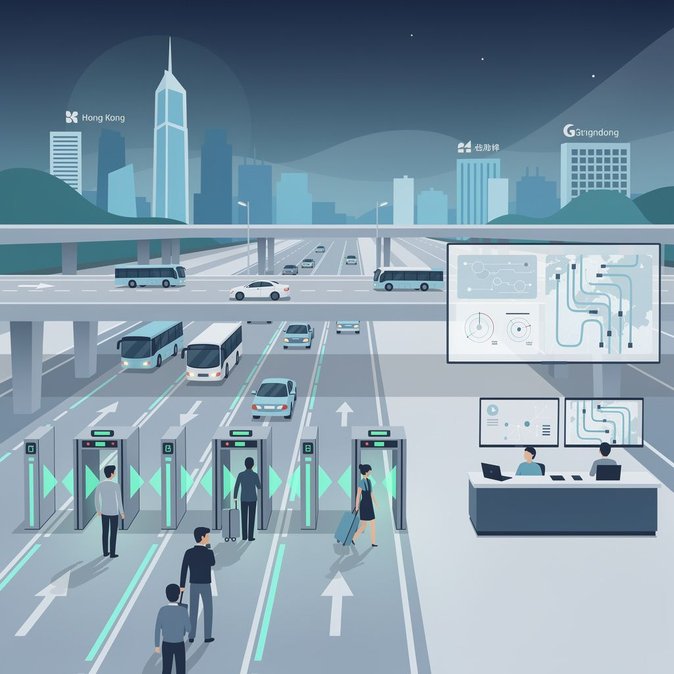
In a written Legislative Council reply released on 18 November, the Hong Kong government provided the first comprehensive operational data on the redeveloped Huanggang Port, the city’s newest 24-hour co-located border crossing with Shenzhen. Since opening on 12 October, the port has averaged 88,000 passenger crossings on weekdays and 142,000 on weekends—more than double the flows previously handled at Lok Ma Chau. Officials acknowledged late-night congestion during concert weekends but said 95 percent of travellers cleared immigration in under five minutes during normal hours. To keep queues down, the Immigration Department has added extra e-Channels, deployed crowd-management ambassadors and set up a mobile enrolment station for first-time biometric users. The Transport Department has also extended the dedicated public-transport lane on San Tin Highway and can now dispatch franchised buses every two to three minutes at peak times. Crucially for business travellers, Hong Kong and Shenzhen authorities have agreed to flexible contingency arrangements; for example, Shenzhen Bay Control Point was kept open two extra hours during Halloween weekend to alleviate pressure. Meanwhile, police have stepped-up enforcement against illegal cross-boundary ride-hailing, warning that offending vehicles may be impounded and their Closed Road Permits revoked. Mobility managers moving staff between Hong Kong and mainland offices should revisit shuttle schedules, use the government’s “Easy Boundary” real-time wait-time portal and brief employees on the new port’s traffic-diversion plans ahead of the year-end holiday surge. Longer term, plans to redevelop Sha Tau Kok into a passenger-only crossing promise to further redistribute flows across the boundary network.