Canada now counts stipend-funded academic work toward Express Entry eligibility
Newfoundland & Labrador issues 98 invitations in latest NLPNP/AIP draw
Rolling bus strikes in Victoria highlight last-mile risk for international assignees
Latest News

International Arrivals to Canada Reach 4.9 Million in October, Early Data Show
StatsCan’s flash estimate shows 4.9 million international arrivals in October 2026, up 4.2 percent year-over-year and closing in on pre-pandemic volumes. The rebound signals stronger demand for air capacity and border resources, with implications for corporate travel budgeting and supply-chain timing.

Canada logged 4.9 million international arrivals in October, Statistics Canada says
Preliminary Statistics Canada data show 4.9 million international arrivals in October 2026, up 4.2 % year-over-year and nearing pre-pandemic levels. The upswing signals a busy winter travel season and underscores the need for expedited-inspection programs.

British Columbia Lowers Entrepreneur PNP Cut-Off, Invites 12 Applicants
B.C.’s latest PNP entrepreneur draw invited 12 Base-stream applicants at a cut-off of 117, signalling slightly easier entry for foreign business owners. The lower score offers new options for investors but raises due-diligence demands as real-estate and labour costs climb.

Canada warns: fake or altered documents now trigger automatic five-year entry ban
IRCC’s 19 November advisory states that any falsified document submitted with a Canadian immigration or visa application will lead to refusal and at least a five-year entry ban. Employers should tighten document-verification protocols to avoid assignment disruptions and reputational risk.

Ancestry rule change under Bill C-3 drives surge in citizenship-by-descent queries
Public awareness of Bill C-3’s removal of the first-generation limit has fuelled a rush of citizenship-by-descent inquiries, particularly from U.S. residents with Canadian-born grandparents. Processing remains slow, so applicants should assemble multi-generation records early.

IRCC Warns: Fake Documents Can Trigger Five-Year Ban From Canada
IRCC’s 19 November bulletin warns that submitting forged or altered documents now carries a minimum five-year inadmissibility ban. Rising fraud levels have prompted tighter verification protocols that may lengthen processing times and expose employers to penalties.

IRCC warns visa applicants that document fraud now triggers an automatic five-year ban
IRCC has restated that any applicant who submits fake or altered documents will receive a refusal plus a five-year ban. The reminder follows a 17 % rise in forged paperwork this year and signals tougher scrutiny of corporate applications.
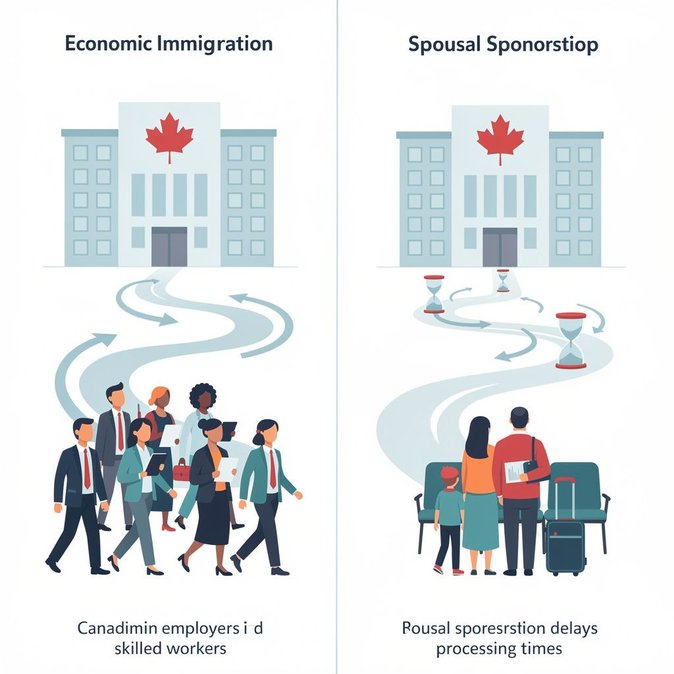
Processing-Time Snapshot: Economic Streams Improve, Spousal Sponsorship Slows
New IRCC figures show economic-immigration processing times inching lower while spousal-sponsorship waits lengthen by about a month. The shift benefits employers filling skilled roles but complicates mobility planning for applicants with accompanying families.
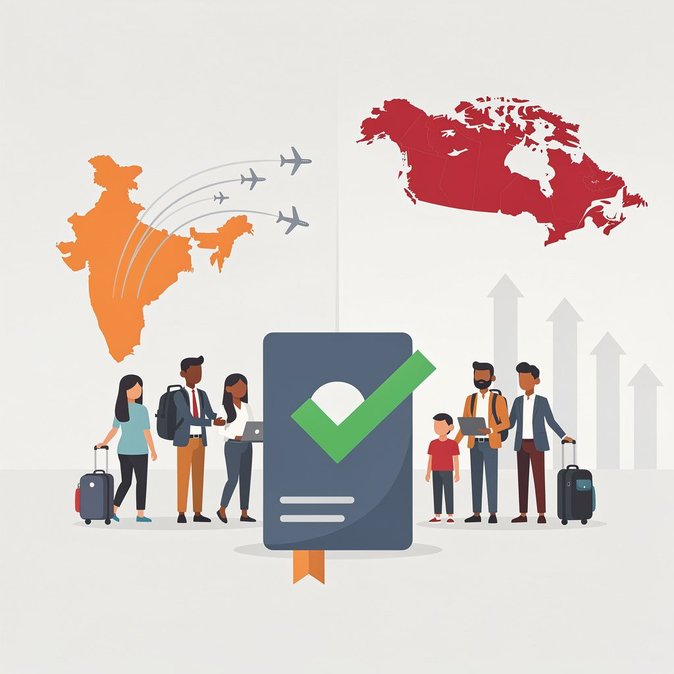
Indian visitor-visa approvals rebound 21 % as Canada issues 816,000 TRVs year-to-date
IRCC data show Canada approved 816,745 visitor visas in the first eight months of 2026, with Indian nationals accounting for 252,145 of them—a 20.8 % year-over-year increase. The rebound signals revived business-and-family travel but approval rates remain tight.

Job Bank’s annual wage refresh shifts LMIA and nominee-program thresholds nationwide
ESDC’s 2026 wage-table refresh has increased prevailing wages across most occupations, affecting LMIA applications, PNP job offers and, eventually, Express Entry CRS bonuses. Employers must update salary offers issued from 19 November onward.

Processing times: most economic streams steady or faster, but spousal sponsorship slows by a month
IRCC’s latest dashboard shows stable or improving processing times for most skilled-worker and PNP streams, while spousal sponsorship now averages 16 months. The divergence could affect workforce-planning and employee-retention strategies.

CBSA’s eManifest and CERS portals undergo early-morning maintenance
CBSA temporarily shut down the eManifest and CERS portals for scheduled maintenance early on 19 November, requiring carriers to use contingency procedures. While the outage was brief, it highlights the importance of digital-system resilience amid peak-season trade flows.

IRCC trims processing times for key temporary residence streams
IRCC’s 18 November processing-time update shows one-week improvements for South-Asian study permits and double-digit gains for Pakistani visitor visas, while work-permit timelines hold steady. The figures suggest recent staff redeployments are reducing backlogs, a positive sign for universities and companies moving talent to Canada.
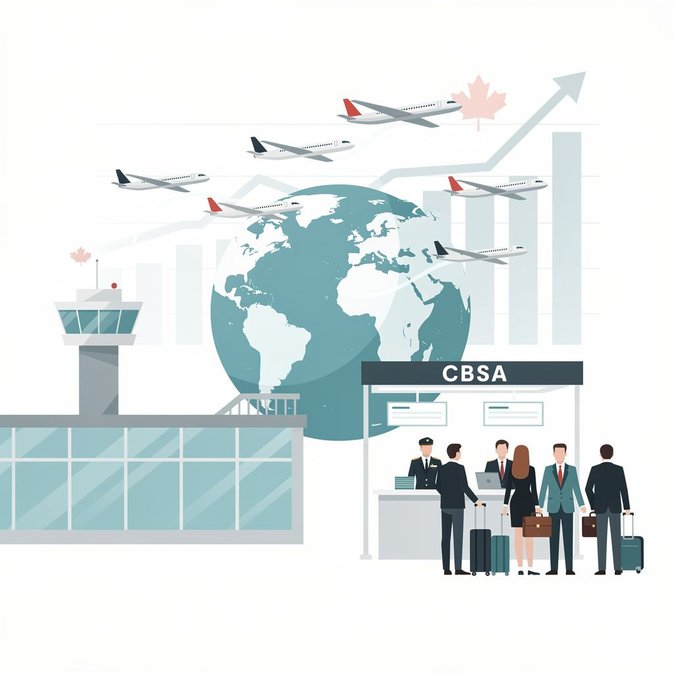
Canada recorded 4.9 million international arrivals in October, Statistics Canada says
Preliminary CBSA and Statistics Canada data indicate 4.9 million international arrivals in October—up 4.2 % from a year earlier and driven by a surge in business travel. Rising volumes have operational implications for CBSA, airports and corporate travel planners.

University stipend incomes now recognised under separate public policy for Express Entry
A new public policy released 19 November makes grant-funded professor work count toward Canadian Experience Class eligibility, potentially fast-tracking roughly 2,300 academics to permanent residence and benefiting campus-based R&D employers.

Annual Job-Bank Wage Refresh Resets LMIA and PNP Thresholds
ESDC’s 2026 Job Bank wage update raises national and provincial medians, immediately affecting LMIA prevailing-wage tests and salary requirements under several PNP streams. Employers must align offer letters with the new rates to avoid refusals and protect Express Entry eligibility.