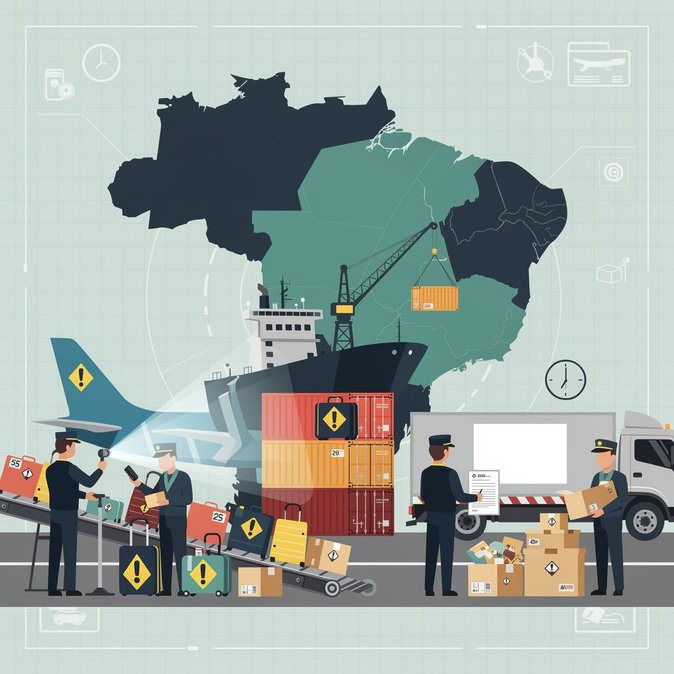
Brazil’s Federal Revenue Service (Receita Federal) published the preliminary results of the 2026 edition of Operation Fronteira on Friday, 20 November. Over eleven days (3-13 November), joint teams drawn from the Receita Federal, Polícia Federal, Polícia Rodoviária Federal, Armed Forces and 25 state-level agencies carried out 2,600 inspections at land crossings, river ports, airports and logistics hubs in 25 of Brazil’s 27 states. The crackdown resulted in the seizure of BRL 495 million (≈ US$ 100 million) in counterfeit goods, narcotics, weapons, wildlife products and undeclared cash. According to Raphael Eugênio de Souza, the Revenue Service’s general coordinator for combating smuggling, the haul is 137 percent higher than in 2025, reflecting both better intelligence-sharing and the geographic expansion of the operation to 140 municipalities (22 percent more than last year). More than 400 federal officers were deployed, supported by scanners, canine units and drones able to read licence plates and container IDs in real time. A key focus this year was Brazil’s so-called ‘dry ports’—inland bonded warehouses that have proliferated along the borders with Paraguay and Bolivia—and secondary roads used by traffickers to bypass fixed checkpoints. Officers also boarded 71 domestic flights to check for drug mules and inspected 312 courier depots suspected of moving high-value electronics bought abroad without tax. For corporate mobility and trade-compliance teams the message is clear: expect heightened scrutiny of goods and personal effects entering Brazil for the rest of the peak season. Companies moving equipment or sample merchandise should double-check import licences and ensure that employees carry invoices when travelling. Logistics providers moving through Foz do Iguaçu, Corumbá, Ponta Porã and Tabatinga report wait-times of up to four hours at customs sheds in the aftermath of the blitz. Operation Fronteira began in 2021 as an annual show of force against organised crime, but officials hint it will soon become a standing task-force. An announcement on year-round mobile inspection teams is expected in early 2027, which would make Brazil’s border regime one of the most aggressive in South America for high-risk cargo.
Source: Agência Brasil