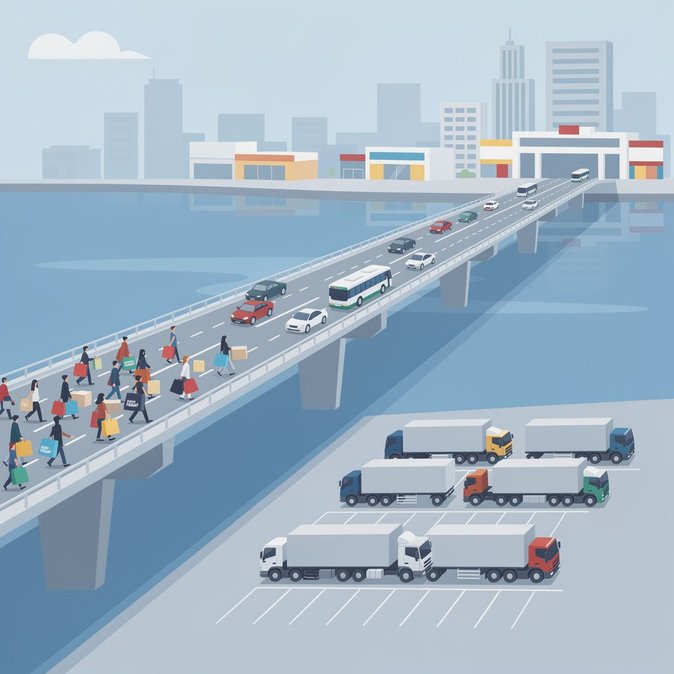
More than 20,000 Brazilian shoppers had already walked across the Ponte Internacional da Amizade into Ciudad del Este by 08:30 on Saturday, 21 November, according to border-authority estimates published by Prensa Mercosur. The surge marks the start of the region’s four-day Black Friday sales, when electronics and perfume outlets on the Paraguayan side cut prices by up to 70 percent. To keep passenger traffic moving, Brazilian and Paraguayan customs officials agreed to suspend all freight traffic over the bridge on 20-21 November, a period that coincides with Brazil’s National Black Consciousness holiday. Only private cars, tour buses and pedestrians are allowed to cross; articulated lorries are being diverted to the newer Ponte da Integração some 15 km downstream or instructed to wait until Monday. Forwarders report that the embargo has stranded an estimated 1,200 export containers of soy, beef and white goods on the Brazilian side, while importers of garments and electronics warn of tight delivery windows ahead of Christmas. The joint decision stems from lessons learned in 2025, when freight traffic grid-locked the bridge for eight hours and emergency vehicles struggled to pass. This year, Foz do Iguaçu city hall deployed 300 municipal guards, while Paraguay’s customs office extended its Sofia IT system’s working hours to 21:00 to clear pending import declarations. For cross-border employers the practical advice is to schedule just-in-time deliveries either side of the long weekend and brief travellers to carry proof of purchase for high-value goods on re-entry to avoid confiscation. Carriers using the Friendship Bridge should monitor live cameras and traffic apps, as authorities have warned that pedestrian volumes could top 80,000 a day if the Brazilian real stays strong against the guarani. Beyond retail, the temporary truck ban underscores a broader trend: Mercosur border agencies are increasingly willing to impose targeted mobility restrictions to manage tourism peaks. Companies rotating staff between Brazil and Paraguay should track local holiday calendars and build flex-days into project plans.
Source: Prensa Mercosur