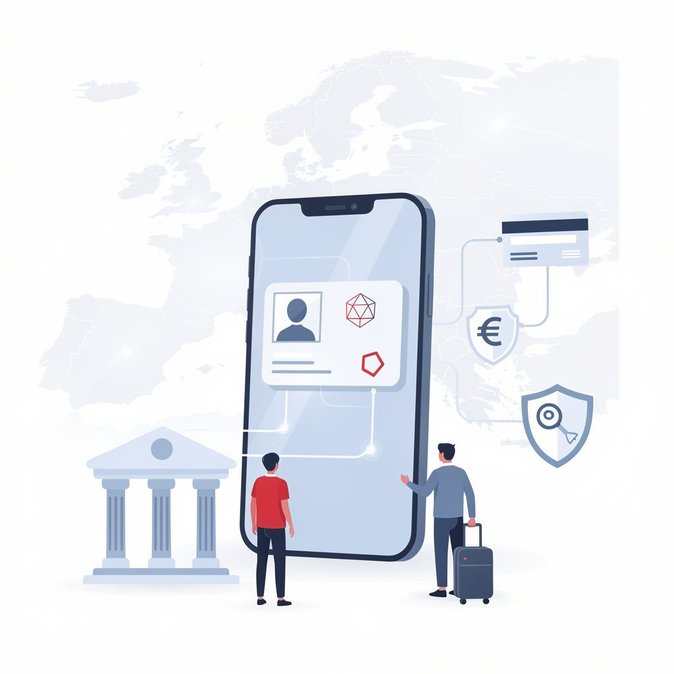
Austria’s state-backed electronic identity scheme, ID Austria, is moving beyond e-government portals into mainstream financial services. At a round-table in Vienna on 25 November Digitalisation State Secretary Alexander Pröll and leading banks agreed to scale up ID Austria for online account opening, digital signatures and secure customer authentication. UniCredit Bank Austria, Raiffeisen and others already accept the credential; the next wave will target branch transactions, corporate mandates and automated KYC (know-your-customer) processes. For foreign professionals and expatriates the development could remove one of the last paper chokepoints in relocation: opening a bank account from abroad or during quarantine currently requires video identification or in-person verification. With ID Austria, newcomers who have collected their residence card—and thus hold the electronic certificate embedded in the chip—could set up payroll accounts remotely before arrival. Banks see efficiency gains in replacing manual passport scans with a government-verified identity token. The Finance Ministry and data-protection authority are drafting common technical interfaces to ensure customer consent and AML compliance. The pilot will inform Austria’s implementation of the forthcoming EU eID Wallet, potentially positioning ID Austria as a recognised cross-border credential for payments and public-sector log-ins. Multinational employers should update arrival checklists: obtaining an ID Austria (often issued together with the residence permit) will increasingly become a prerequisite not just for tax filings but also for banking, telecom contracts and even tenancy agreements. Roll-out timelines vary by bank, but full sector coverage is expected during 2027.
Source: Bundeskanzleramt Österreich