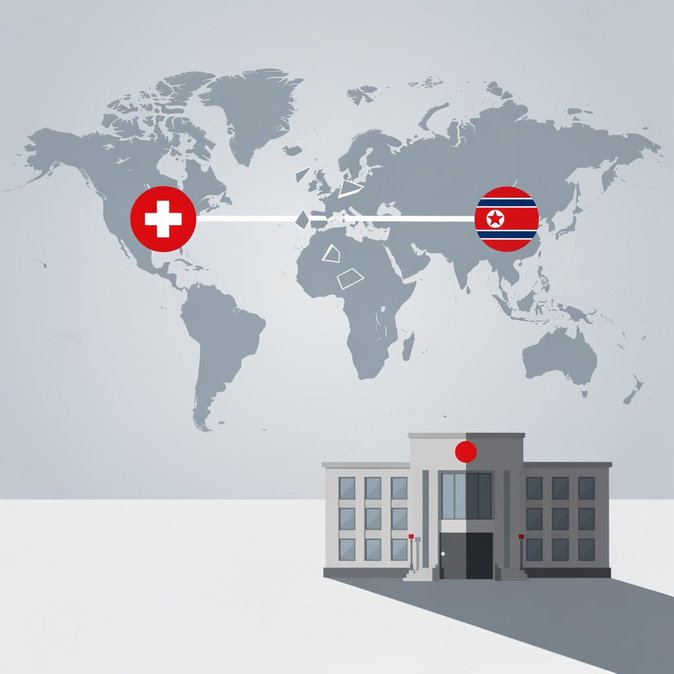
North Korea on 27 November 2026 demanded that Switzerland shut down its month-old cooperation office in Pyongyang and ordered its head, Astier Sylvain, to leave the country within 48 hours. The move—reported by the Korean Central News Agency and confirmed to the Associated Press by Switzerland’s Federal Department of Foreign Affairs—effectively ends Bern’s short-lived attempt to restore an on-the-ground presence in the DPRK after COVID-era closures. Swiss officials emphasised that diplomatic relations will continue via the embassy in Beijing and that humanitarian projects will be supervised remotely. However, the closure deprives Swiss humanitarian agencies of a local logistics hub and will complicate visa support for Swiss and other Schengen-area NGOs operating in North Korea, many of which rely on Swiss protective-power mandates. The North Korean Foreign Ministry cited Swiss support for UN and EU sanctions—as well as Bern’s recent asset freeze against a youth “Songdowon International Children’s Camp”—as the reason for its decision. Analysts note that the expulsion fits Pyongyang’s pattern of using diplomatic staff as leverage when sanction pressure intensifies. For Swiss companies with interests in the broader Korean peninsula, the episode underlines growing geopolitical risk. While commercial travel to the DPRK remains rare, the absence of a Swiss consular foothold means that any business-critical visits—once sanctions permit—would require third-country facilitation, lengthening lead-times for visa approvals. Bern has not indicated whether it will retaliate; officials say they will “pursue dialogue through existing channels”. The incident shows how diplomatic developments abroad can have knock-on effects for global-mobility planners in Switzerland, especially those tasked with crisis-response and duty-of-care for staff in sanctioned jurisdictions.
Source: Associated Press