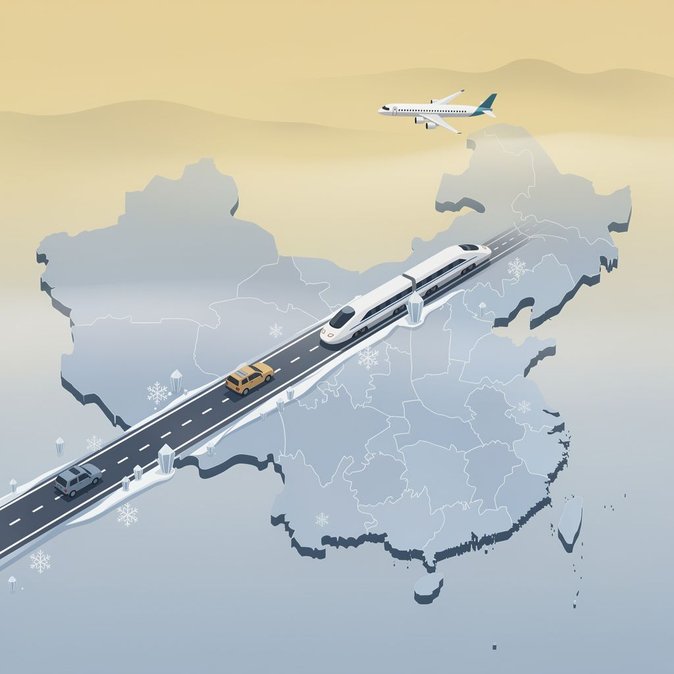
China’s Central Meteorological Observatory issued a string of yellow alerts late this afternoon warning of heavy fog and potential road icing from Xinjiang across Inner Mongolia to the North China Plain between 28 November and 1 December. The advisory covers key logistics arteries including the G6 Beijing-Lhasa Expressway near Manas County and the Beijing-Harbin High-Speed Railway segment through Hebei. Under China’s colour-coded system, a yellow warning (the third-highest level) obliges provincial transport bureaus to prepare salt-spreading crews and authorises local public-security traffic police to impose rolling road closures. Manas County, Xinjiang, was first to act, deploying 37 de-icing vehicles on National Highway 312 and instructing trucking companies to stagger departures. In Hebei’s Qinghe County, police diverted long-haul buses to service areas and urged private motorists to delay trips. For employers managing winter travel, the alerts mean that weekend transfers of project teams from Beijing to client sites in Shijiazhuang or Hohhot could face multi-hour highway holds. Airlines operating night flights into regional airports such as Xilinhot and Tangshan have warned of diversion risks if runway visual range drops below 400 m. China State Railway Group has prepared standby locomotive crews at Baotou and Zhangjiakou to operate de-icing runs should rails glaze over. The National Immigration Administration has not issued entry-exit policy changes, but past practice suggests temporary suspension of highway border-crossing points in Inner Mongolia if visibility deteriorates further. Cross-border drivers on the Erenhot-Zamyn-Uud route should therefore check customs schedules before setting out. Corporate mobility managers should push real-time weather feeds to travellers’ phones and remind drivers that mainland China mandates snow-chain carriage on certain expressways after a yellow icing alert. Failure to comply can attract ¥200 fines and licence demerit points—costly oversights for assignees unfamiliar with local rules.