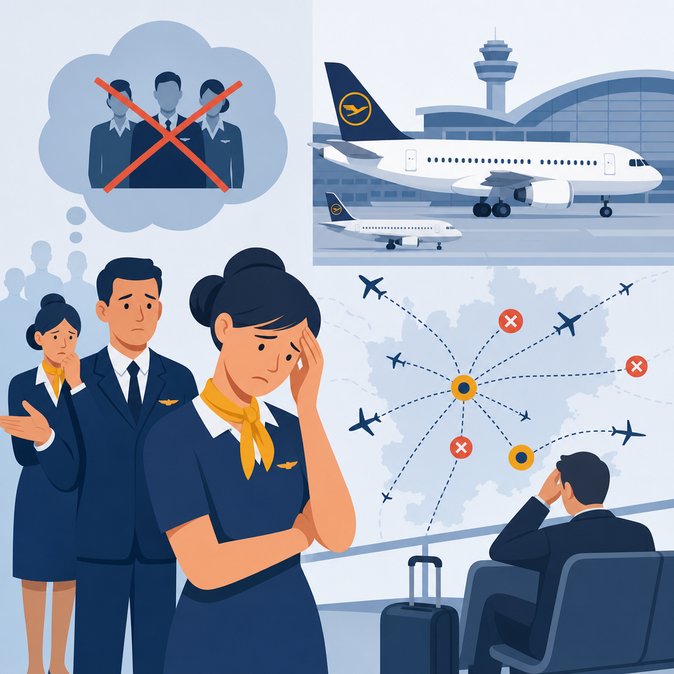
The Independent Flight Attendants’ Organisation (UFO) sounded the alarm on 3 June 2026 that a shortage of cabin personnel could force Lufthansa to cancel or down-gauge flights during the busy summer period. In comments to T-Online, UFO vice-chair Sara Grubisic said the winding-down of regional subsidiary CityLine in April shifted flying to mainline Lufthansa without sufficient crew transfers, leaving about 800 attendants in limbo. The union claims that long-haul services are already operating below standard staffing levels and that management is circulating voluntary overtime requests for the entire month of June. Lufthansa rejected the allegations, stating it is “very well positioned for the summer schedule” and that every flight will exceed the minimum crew ratios mandated by the European Aviation Safety Agency (EASA). The carrier recently introduced a revamped onboard-service concept and insists that customer feedback is positive. Nevertheless, industry analysts note that Lufthansa has been locked in a series of labour disputes with pilots and ground staff since early 2026, leading to several strike waves and reputational damage among corporate travellers. For global mobility managers the prospect of last-minute cancellations on Europe’s largest network airline is unsettling. Frankfurt and Munich act as key hubs for assignee relocations and project travel; even modest schedule thinning can break onward connections, trigger overnight hotel costs and complicate time-sensitive visa activation appointments at foreigner authorities. Travel teams are therefore advised to build buffer days into itineraries and keep alternative routings—particularly via Amsterdam, Zurich or Vienna—on hold. The warning also illustrates how structural fleet decisions cascade into staffing pressures. By discontinuing CityLine’s wet-lease model, Lufthansa consolidated capacity but underestimated crew redeployment timelines, according to UFO. Should talks fail, the union has not ruled out industrial action—a scenario that would add to a summer already challenged by air-traffic-control slot shortages across Europe. Companies with German-based assignees should monitor Lufthansa’s operational updates and ensure Traveller Tracking systems capture any rebooking so that duty-of-care alerts function properly. In parallel, HR departments may want to brief newcomers on rail alternatives for domestic segments, in line with sustainability policies that already favour Deutsche Bahn for journeys under four hours.
Source: t-online