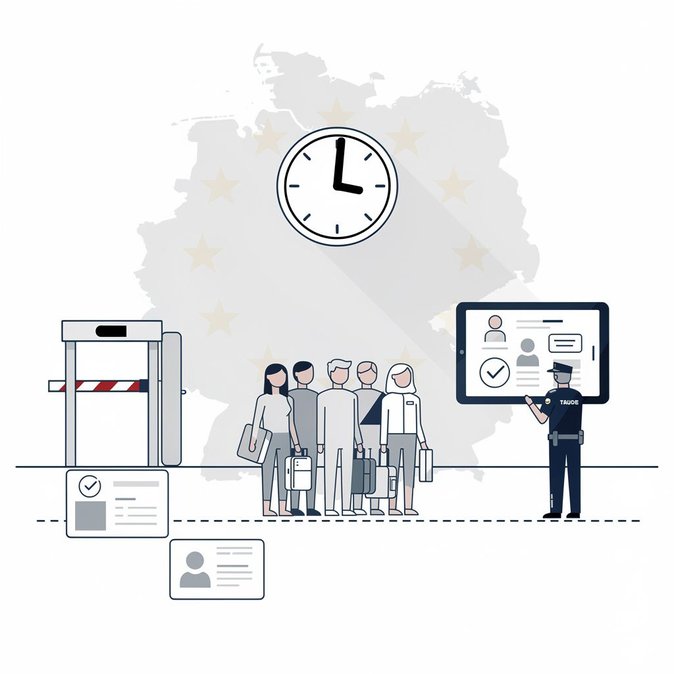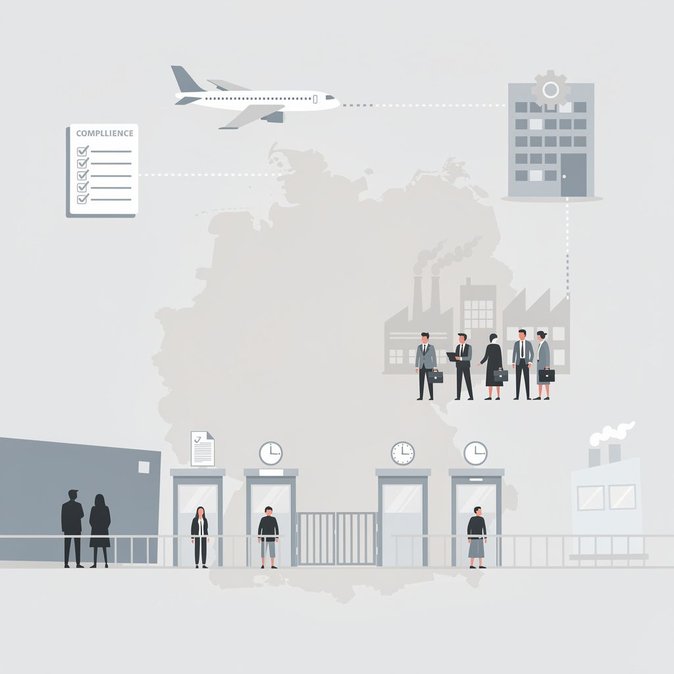
Parallel to the Residence-Act overhaul, Germany has replaced core chapters of the Asylum Act (AsylG) to mirror the EU’s new screening and border-procedure regulations. The consolidated version published today removes no fewer than 11 former sections on persecution criteria and inserts an entirely new Sub-section 4 (§§ 12b–12c) that allows authorities to restrict NGO and lawyer access to closed areas, detention facilities and border posts if ‘public order’ would otherwise be jeopardised. The reform introduces a compulsory *pre-entry screening* lasting up to seven days at airports and land borders, followed by accelerated asylum or return procedures that must be completed within 12 weeks.
However, if your organisation or clients need to navigate Germany’s complex entry rules in real time, VisaHQ’s dedicated team can streamline the process. Their Germany portal (https://www.visahq.com/germany/) breaks down current visa categories, paperwork requirements and processing timelines, providing hands-on assistance that keeps business travel and assignments on schedule despite the new border constraints.
Applicants from countries with an average EU recognition rate below 20 % will be channelled automatically into the fast-track track. Family units with children are not exempt, a provision human-rights groups already criticise as incompatible with the UN CRC. For employers this matters because the waiting period before asylum seekers gain labour-market access is reset: only those who pass the initial border procedure and are relocated to an inland reception centre will be eligible to apply for work after three months (previously six). Corporations in logistics and food processing – sectors that traditionally hire asylum applicants – should therefore anticipate a **smaller but faster-cleared** talent pool. Important for business travellers: § 18a has been rewritten to authorise extended airport procedures. Airlines operating charter services must now deliver complete passenger manifests 48 hours in advance and may be liable for detention costs if passengers are declared inadmissible. Travel managers should review airline contracts to address cost-recovery clauses. The interior ministry has promised a digital tracking portal (“Asyl-Portal 360”) for legal representatives, but pilot rollout is limited to Bavaria in Q3. Until then, counsel must request paper files – another operational hurdle when advising assignees caught in the new system.

However, if your organisation or clients need to navigate Germany’s complex entry rules in real time, VisaHQ’s dedicated team can streamline the process. Their Germany portal (https://www.visahq.com/germany/) breaks down current visa categories, paperwork requirements and processing timelines, providing hands-on assistance that keeps business travel and assignments on schedule despite the new border constraints.
Applicants from countries with an average EU recognition rate below 20 % will be channelled automatically into the fast-track track. Family units with children are not exempt, a provision human-rights groups already criticise as incompatible with the UN CRC. For employers this matters because the waiting period before asylum seekers gain labour-market access is reset: only those who pass the initial border procedure and are relocated to an inland reception centre will be eligible to apply for work after three months (previously six). Corporations in logistics and food processing – sectors that traditionally hire asylum applicants – should therefore anticipate a **smaller but faster-cleared** talent pool. Important for business travellers: § 18a has been rewritten to authorise extended airport procedures. Airlines operating charter services must now deliver complete passenger manifests 48 hours in advance and may be liable for detention costs if passengers are declared inadmissible. Travel managers should review airline contracts to address cost-recovery clauses. The interior ministry has promised a digital tracking portal (“Asyl-Portal 360”) for legal representatives, but pilot rollout is limited to Bavaria in Q3. Until then, counsel must request paper files – another operational hurdle when advising assignees caught in the new system.