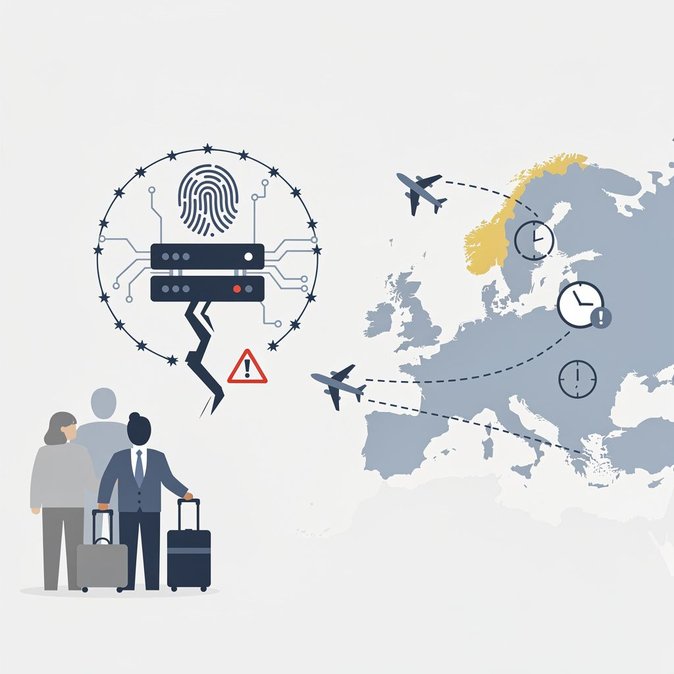
Barely hours after the EU’s migration pact went live, Eurodac — the central biometric database underpinning the new regime — suffered a technical failure, Dutch authorities confirmed at midday on 12 June. Several member states were unable to upload fingerprints, forcing manual fallback procedures at key airports and land crossings. The European Commission downplayed the disruption, saying systems were “gradually linking in”, but border officials privately warned of longer queues as frontline staff switched to paper processes. Carriers operating out of London-City, Heathrow and Manchester to EU hubs have already advised passengers to allow extra time. For UK businesses the episode is a cautionary tale: the post-Brexit travel environment increasingly depends on EU IT platforms outside British control. Any instability can ripple straight back to British travellers required to undergo Schengen entry checks. Contingency planning — including flexible ticketing policies and communication protocols with assignees — is therefore essential. Eurodac’s downtime also postpones some Dublin-style returns because asylum claims cannot be matched promptly, meaning secondary movements to the UK could increase in the short term. Home Office officials say they are “monitoring the situation closely” but have yet to announce counter-measures. The incident underscores broader concerns about whether member states are technologically ready for the October roll-out of the separate Entry/Exit System (EES), which will apply to British visitors.
Source: Reuters (via StreetInsider)