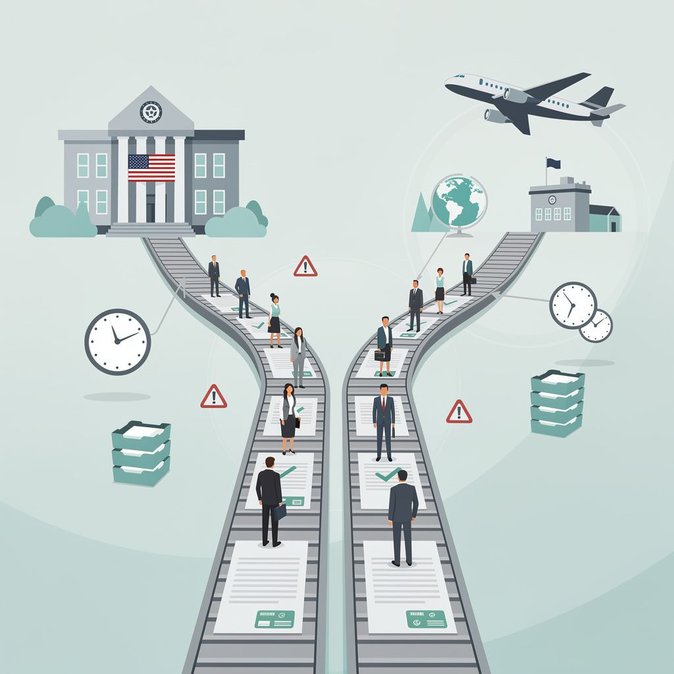
Employers can once again file new H-1B petitions without a six-figure surcharge after the U.S. District Court for Massachusetts struck down President Trump’s $100,000 “supplemental payment” on June 8 and entered a nationwide vacatur. Updated analysis released June 12 confirms that USCIS may not collect the fee unless a higher court issues a stay. Judge Leo T. Sorokin ruled that the supplemental payment—imposed by Presidential Proclamation 10973 in September 2025—functioned as a tax outside the president’s authority and was promulgated without notice-and-comment rule-making. The decision contrasts with a December 2025 ruling from the District of Columbia that upheld the fee, creating a circuit split likely to reach the First and D.C. Circuits. The immediate impact is substantial savings for employers planning FY 2027 cap-subject filings. Tech, health-care and academic institutions had warned the surcharge would stifle recruitment, particularly of entry-level STEM talent. With the fee gone, demand for the FY 2027 lottery—already subject to a new wage-weighted selection rule—could surge beyond last year’s record 560,000 registrations. Global-mobility teams should update budgeting models and notify recruiters that prevailing wage, filing and anti-fraud fees remain unchanged. Petitioners who paid the $100,000 between September 2025 and June 8 may be eligible for refunds, but DHS has not yet issued guidance. Employers should keep detailed proof of payment and monitor the Federal Register for refund procedures. The ruling also signals judicial skepticism toward fee-based deterrents in immigration policy. Observers expect litigants to challenge other user-fee hikes—including the forthcoming I-129 filing-fee increase—if agencies cannot demonstrate statutory authority and adherence to procedural requirements.
Source: The Visa Wire