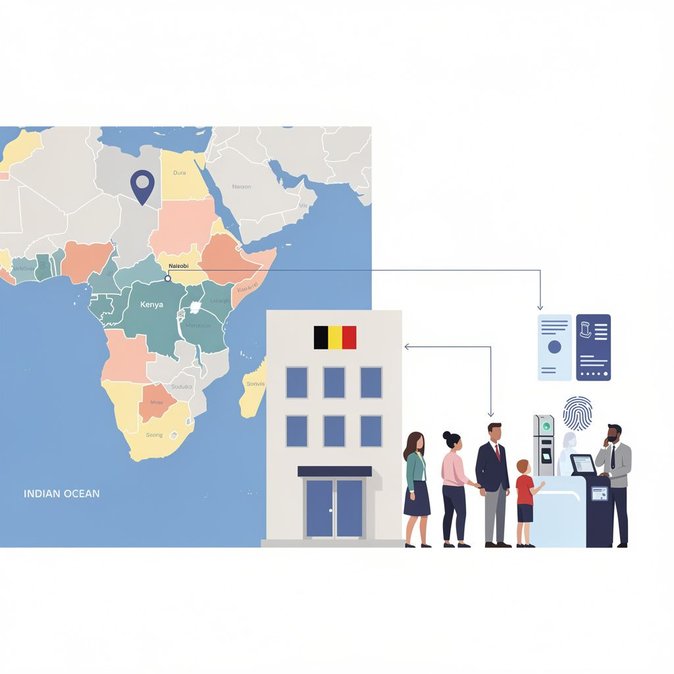
The Embassy of Belgium in Kenya quietly revised its consular guidance on 12 June 2026, clarifying where citizens and residents of seven East-African and Indian-Ocean states should file Schengen and long-stay (D) visa applications. The notice affects travellers from Kenya, Rwanda, Somalia, Madagascar, Eritrea, Seychelles and Comoros—important source markets for Belgian universities and the country’s agro-industry employers. Key points include a reminder that all applicants must now lodge biometric files through the TLScontact centre in Nairobi, with few exceptions. For short-stay (C) visas, certain nationalities are redirected to French or Italian embassies acting on Belgium’s behalf; long-stay students and family-reunification cases, however, must still appear in person at the TLS hub or send two complete paper dossiers by courier. The embassy also reiterates that fingerprinting is compulsory for applicants aged six and above. The clarification is timely: Belgian universities have opened admissions for the 2026-27 academic year, and scholarship holders were previously unsure whether courier submission sufficed. Immigration advisers say the new wording should reduce incomplete files that have slowed processing times to as much as 12 weeks. Corporate mobility teams placing engineers or NGO staff in Belgium from the region should cross-check assignment pipelines against the updated routing rules. Failure to submit through the competent post can trigger automatic rejections under Article 32 of the Visa Code, adding months to deployment schedules. While described as a ‘technical update’, the revised page underscores Belgium’s preference for centralised biometric capture and may foreshadow similar consolidations in West Africa later this year.