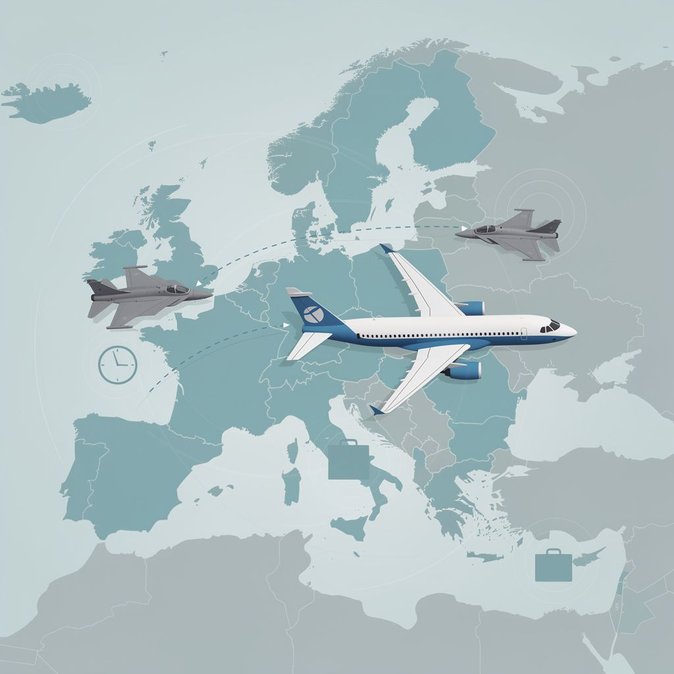
Air-traffic managers activated NATO’s highest alert level on the evening of 11 June after an El Al Airbus A321 en-route from Tel Aviv to Prague fell silent while crossing Hungarian airspace. Within minutes, two JAS-39 Gripen jets from the Hungarian Air Force intercepted the aircraft, established visual contact and escorted it until radio communication was restored. The flight continued to Václav Havel Airport without further incident, landing only 15 minutes behind schedule. Although loss-of-contact incidents are rare, they can trigger cascading disruptions across Europe’s tightly choreographed skies. Prague Airport’s operations centre confirmed that several inbound flights were held in holding patterns as a precaution, and ground handlers reported short-lived gate delays during the evening peak. For corporate travel managers, the episode is a reminder to build slack into connection times—especially when routing staff via multiple internal Schengen legs where air-policing protocols differ by country. From a compliance standpoint, the scramble underscored NATO’s integrated air-defence rules that apply even to civilian carriers. Airlines operating to the Czech capital may now face closer scrutiny of crew radio-check procedures. Mobility teams arranging urgent last-minute travel (for example, for on-site engineers or crisis consultants) should advise travellers that cockpit communications issues—even if purely technical—can prompt airspace closures or diversions with little warning. Security chiefs in several Czech-based multinationals told Global Mobility News that they are reviewing their travel-risk manuals to include NATO interception scenarios. Companies whose executives regularly shuttle between Israel and Central Europe, particularly in the defence, cybersecurity and life-sciences sectors, are urged to verify that their travel-tracking tools can issue real-time alerts when a flight deviates from its filed plan. Insurers may also seek updated risk assessments for routes passing through Hungary’s newly expanded military air-policing zone. For now, Czech authorities emphasise that passenger safety was never compromised. Yet the event highlights how geopolitical tensions—playing out thousands of kilometres away—can ripple into routine business mobility, reinforcing the need for robust duty-of-care frameworks.
Source: TN.cz