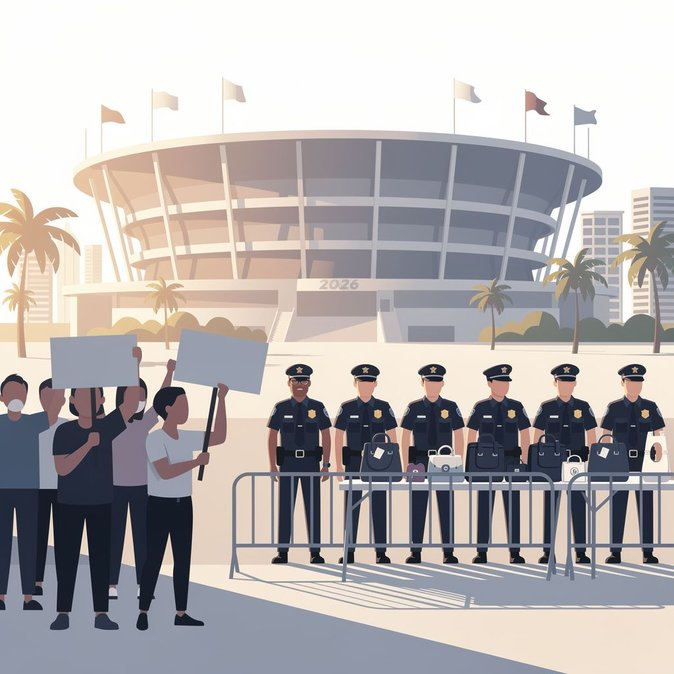
Hours before the United States hosts its first 2026 FIFA World Cup matches, South Florida activists and local officials are voicing concern over the visible deployment of U.S. Immigration and Customs Enforcement (ICE) agents at stadiums and fan zones. In an interview with CBS Miami on June 12, Sen. Markwayne Mullin defended the deployment by noting ICE’s broad remit—which includes counterfeit-ticket investigations and anti-trafficking operations—but acknowledged agents could make immigration arrests if warranted. DHS subsequently insisted that “international visitors who legally come to the United States have nothing to worry about.” Advocacy groups counter that a heavy enforcement posture may deter undocumented but long-settled residents from attending matches with their families and could chill local economic activity. The debate lands as several teams reported last-minute visa hiccups, underscoring the high-stakes intersection of mega-events and U.S. entry controls. Tournament organizers have promised multilingual know-your-rights materials and designated legal-aid areas outside stadiums. Corporations bringing in clients or staff should brief travelers on carrying proper identification, avoiding overstays and having legal counsel on call. The episode is a reminder that major sporting events can amplify routine mobility challenges—from visa issuance to on-the-ground enforcement—and that perception often shapes traveler behaviour as much as policy.
Source: CBS Miami