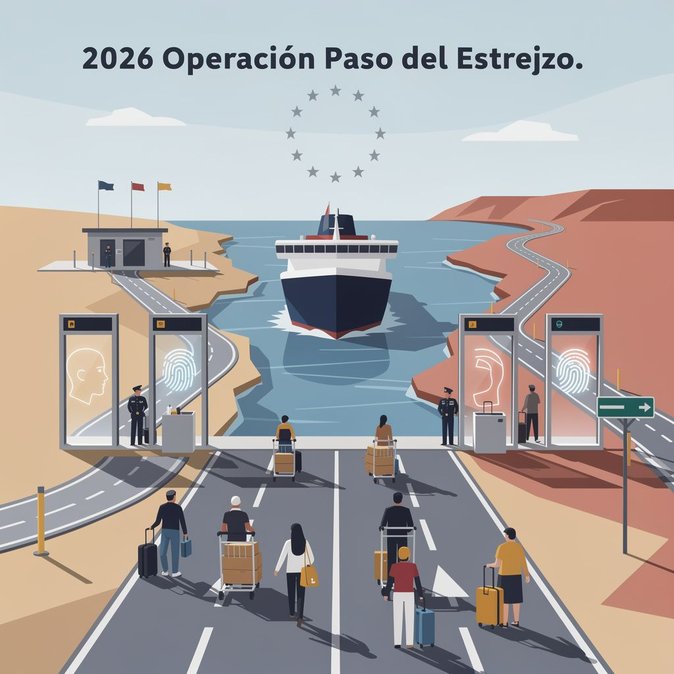
Spain woke up on 13 June to the formal start of the European Union’s new Migration and Asylum Pact, a sweeping reform that tightens external-border controls, speeds up asylum screening and obliges member states to share responsibility for irregular arrivals. Brussels expects all 27 capitals to transpose the package quickly, yet Madrid has asked for “technical time” before adapting its own Immigration Regulation (Real Decreto 557/2011) and border-management protocols. Government sources cite the country’s on-going extraordinary regularisation programme—due to close on 30 June—as the main reason for the pause: ministries fear overlapping rules could paralyse Spain’s already stretched immigration offices. Business-immigration lawyers warn that the delay leaves companies sponsoring non-EU talent in a “grey zone,” because fast-track return procedures and new biometrics requirements may be imposed at Schengen airports even if Spain’s domestic rules lag behind. Air- and sea-carriers are also nervous. Airlines must transmit advance passenger data that now feed the EU’s new Screening Regulation; failure can trigger sizeable fines. Aena, Spain’s airport operator, says it will need at least 200 extra border-police booths in Madrid-Barajas and Barcelona-El Prat to keep queues under one hour during the July-August high season. For employers, the practical advice is to double-check that posted workers and assignees carry proof of residence or a multiple-entry visa: under the pact’s new pre-entry checks those lacking documentation may be channelled into fast-track refusal or detention. Global-mobility teams should also track whether Spain aligns its humanitarian-permit regime with the EU’s tougher return deadlines; Venezuelan assignees, the largest group holding such permits, could be especially exposed. Over the medium term, Spain’s hesitation may give it leverage in Brussels to secure more funding for border surveillance in the Canary Islands, but companies cannot assume today’s practices will last. The Ministry of the Interior has pledged to publish draft transposition rules “before the end of summer,” meaning further compliance adjustments are almost certain in Q3 2026.
Source: Qué! Diario