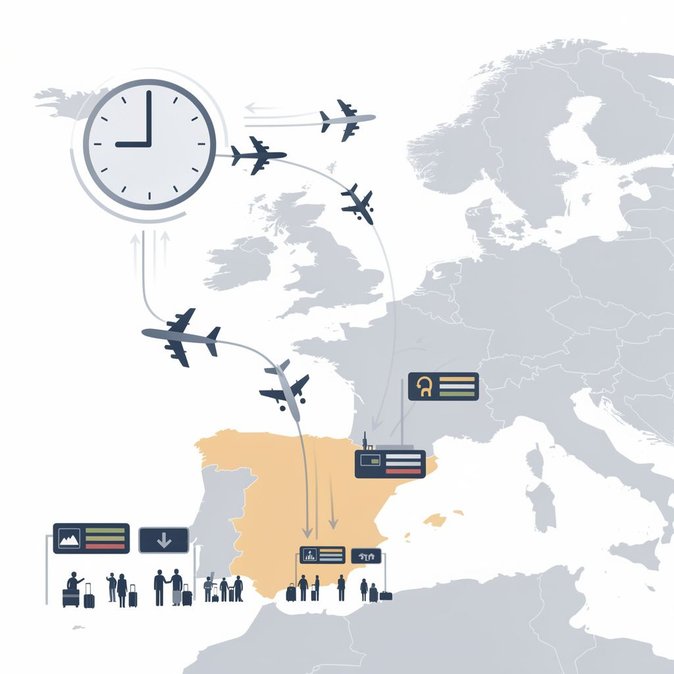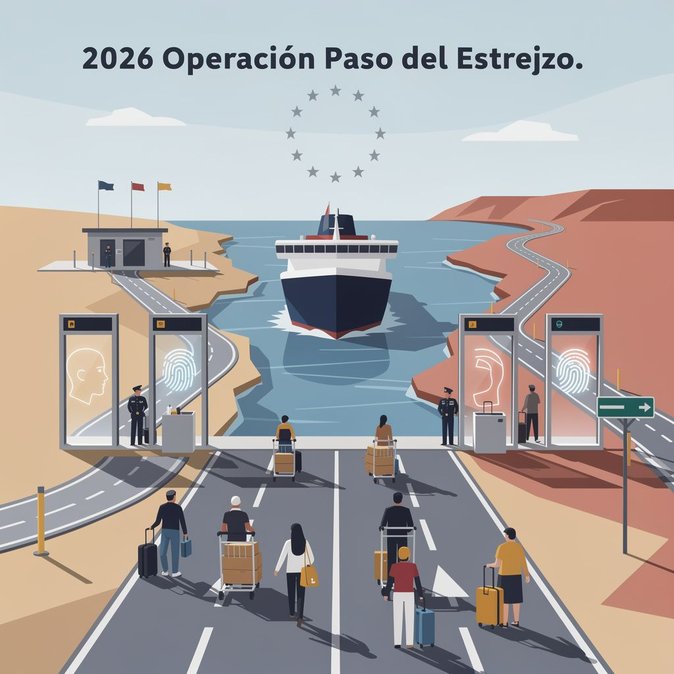
Spain’s biggest seasonal movement of people – the Operación Paso del Estrecho (OPE) – begins this year on Monday, 15 June and will run until 15 September. The Government’s delegate in Andalucía, Pedro Fernández, confirmed on Sunday that more than 31,500 professionals from seven ministries have been assigned to keep traffic flowing through the five Andalusian ports that handle 96 % of the Strait of Gibraltar ferry traffic. Passenger volumes are expected to top 3.5 million – up 3 % on last year’s record – and 850,000 vehicles. The standout innovation in 2026 is the integration of the EU’s new Entry/Exit System (EES). Travellers from outside the Schengen Area will have their fingerprints and facial images captured automatically at land and port border posts before boarding. Real-time biometric data will be merged with live traffic, port-operations and meteorological feeds to give authorities a dashboard view of congestion hot spots. The Ministry of the Interior says the goal is to “minimise risk and improve traveller experience”. Behind the scenes, a State Coordination and Direction Committee (CECOD) has redesigned the OPE’s risk-management architecture. In addition to a revamped civil-protection plan, the fleet plan sets vessel capacities and sailing frequencies, while a road-safety plan coordinates the Guardia Civil’s motorway patrols from the French border all the way down to Algeciras and Tarifa. Critical peak days have been flagged when ticket-interchange rules will allow passengers to board the first available ferry regardless of the shipping line printed on their ticket. For companies that manage expatriate workforces in Morocco, Algeria or West Africa – and for hauliers who rely on ferry crossings for just-in-time deliveries – the smoother the OPE runs, the lower the risk of costly delays. Travel managers are being advised to book tickets in advance, monitor the transport ministry’s OPE web portal and build extra hours into itineraries on the busiest weekends. The 37-year-old operation is often cited in Brussels as a test case for large-scale deployment of the EES ahead of its expansion to airports this autumn. A trouble-free summer will go a long way towards reassuring Schengen partners that Spain is ready for full biometric border management – and help safeguard the export-driven supply chains that depend on reliable Strait crossings.
Source: Europa Press