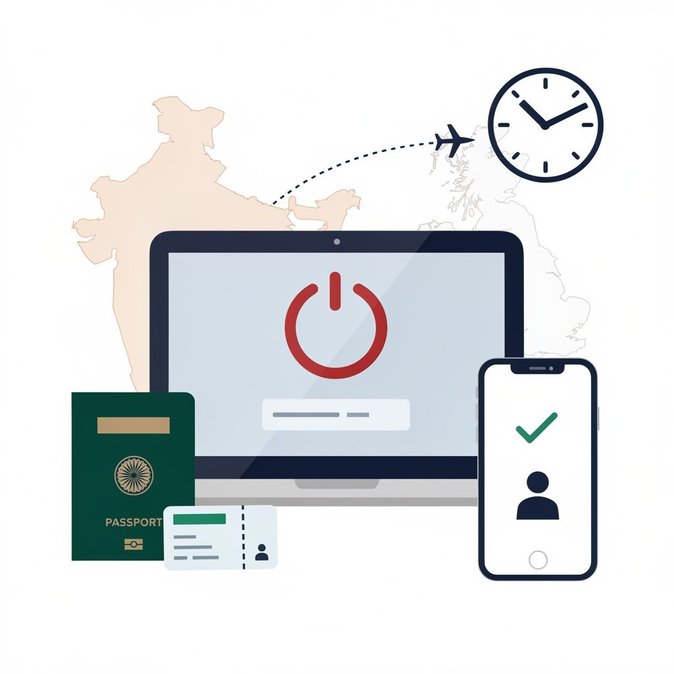
India’s mission in Abu Dhabi has formally awarded its lucrative passport-and-visa outsourcing contract to Al Hind Tours & Travels LLC, ending a 15-year run by BLS International and SGIVS Global. The embassy’s late-evening communiqué on 13 June gives applicants just over two weeks to finish filings with the outgoing providers; any application lodged on or after 1 July must be routed through 16 new Al Hind centres across all seven emirates. Roughly 3.5 million Indian nationals live in the UAE, making it New Delhi’s largest overseas consular workload.
VisaHQ, the global online visa and passport specialist, can help those affected by this hand-over navigate the new requirements: its India resource page (https://www.visahq.com/india/) provides real-time procedural updates, downloadable forms and optional courier services that reduce in-person visits, making the switch to Al Hind’s system smoother for both individual applicants and corporate HR teams.
Services affected include ordinary and diplomatic passports, Overseas Citizen of India (OCI) cards, visa stickers for foreign nationals travelling to India, police-clearance certificates and the Global Entry Programme. Fees are expected to drop from AED 25 to AED 19 per application, but Al Hind will introduce a mandatory online appointment system and QR-based token tracking to cut queues. For employers, the switch means revising employee-mobility calendars: courier pick-up contracts with BLS will lapse, and bulk‐submission desks used by construction, healthcare and shipping firms will move to new locations—most notably a 12,000-sq-ft ‘super centre’ in Bur Dubai. Companies with large renewal batches in June should file immediately or risk their documents being shuttled between vendors during the hand-over. Airlines have been told to watch for a redesigned visa label with an Al Hind watermark beginning 5 July. HR advisers also flag changes in data-privacy clauses: Al Hind will store biometrics on Emirates-based servers, whereas BLS used an India-based cloud. That may affect EU GDPR compliance for dual citizens. Additionally, Al Hind has hinted at weekday evening shifts, which could reduce lost work-hours for staff visiting centres after office hours. The embassy says the transition follows a competitive global tender evaluated on cost, technology and customer-service metrics. It will monitor Key Performance Indicators—average wait time under 20 minutes and first-time-right document acceptance above 95 percent—to avoid the teething troubles that plagued earlier outsourcing cycles.
VisaHQ, the global online visa and passport specialist, can help those affected by this hand-over navigate the new requirements: its India resource page (https://www.visahq.com/india/) provides real-time procedural updates, downloadable forms and optional courier services that reduce in-person visits, making the switch to Al Hind’s system smoother for both individual applicants and corporate HR teams.
Services affected include ordinary and diplomatic passports, Overseas Citizen of India (OCI) cards, visa stickers for foreign nationals travelling to India, police-clearance certificates and the Global Entry Programme. Fees are expected to drop from AED 25 to AED 19 per application, but Al Hind will introduce a mandatory online appointment system and QR-based token tracking to cut queues. For employers, the switch means revising employee-mobility calendars: courier pick-up contracts with BLS will lapse, and bulk‐submission desks used by construction, healthcare and shipping firms will move to new locations—most notably a 12,000-sq-ft ‘super centre’ in Bur Dubai. Companies with large renewal batches in June should file immediately or risk their documents being shuttled between vendors during the hand-over. Airlines have been told to watch for a redesigned visa label with an Al Hind watermark beginning 5 July. HR advisers also flag changes in data-privacy clauses: Al Hind will store biometrics on Emirates-based servers, whereas BLS used an India-based cloud. That may affect EU GDPR compliance for dual citizens. Additionally, Al Hind has hinted at weekday evening shifts, which could reduce lost work-hours for staff visiting centres after office hours. The embassy says the transition follows a competitive global tender evaluated on cost, technology and customer-service metrics. It will monitor Key Performance Indicators—average wait time under 20 minutes and first-time-right document acceptance above 95 percent—to avoid the teething troubles that plagued earlier outsourcing cycles.