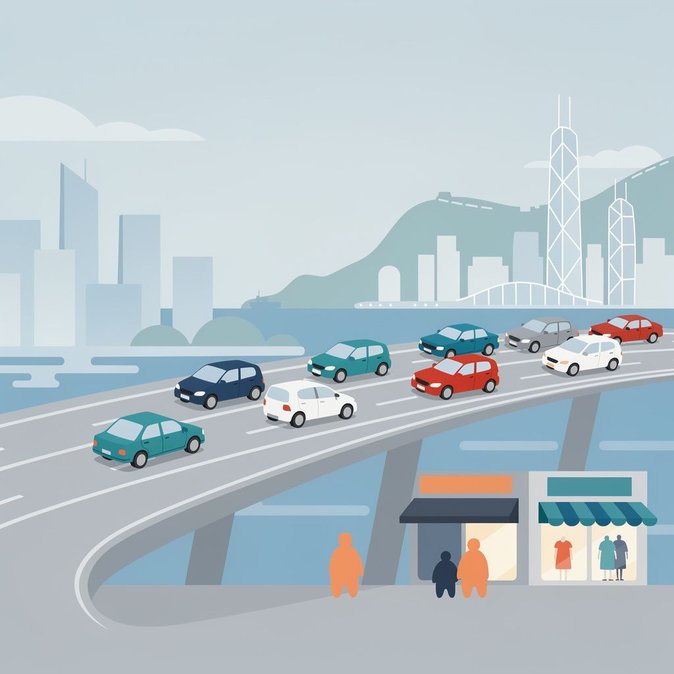
Hong Kong’s Transport and Logistics Bureau told lawmakers on 15 June that its “Guangdong Vehicles Southbound” pilot—allowing private cars from the mainland to self-drive into the SAR—will expand on 25 July to include the remaining five Greater Bay Area (GBA) mainland cities and raise the daily downtown entry quota from 100 to 200 vehicles. Launched only six months ago, the scheme currently covers Guangzhou, Zhuhai, Jiangmen and Zhongshan. Officials said demand has consistently outstripped supply, with holiday dates fully booked minutes after reservation windows open. According to bureau chief Mabel Chan, 90 percent of participating motorists stay just one to two days, so the three-day limit will be retained. To address compliance concerns, the Transport Department is reviewing mainland vehicles’ window-tint (“black window”) standards, licence-plate visibility and insurance equivalence. A consultation paper will be tabled in LegCo in the second half of 2026. Authorities are also working with hoteliers and attractions to create “park-and-visit” packages that coax drivers to leave cars at boundary car-parks and use public transport in-town, easing congestion in Central and Tsim Sha Tsui. For Hong Kong businesses, the wider catchment means a larger pool of weekend shoppers from fast-growing GBA cities such as Dongguan and Foshan. Retailers and F&B operators near the Hong Kong-Zhuhai-Macao Bridge and Lok Ma Chau are already updating loyalty programmes to capture this segment. However, fleet managers should note that commercial vehicles remain excluded; the pilot is strictly for private cars, and violations carry heavy penalties, including a three-year ban from the quota system. Travel-risk teams should monitor the forthcoming LegCo consultation, as any change in vehicle equipment rules could affect cross-border ground-transport contracts and chauffeur providers.
Source: Sing Tao Headline