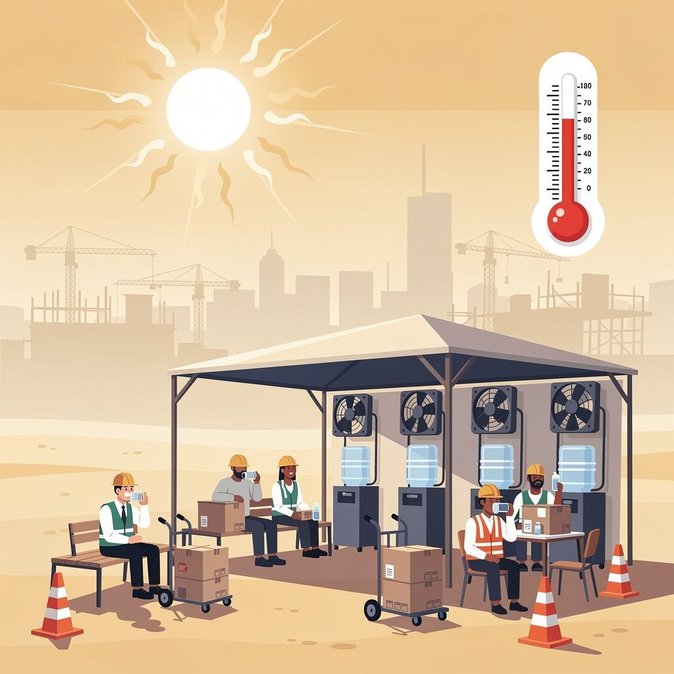
At 12:30 p.m. on 16 June 2026 inspectors from the Ministry of Human Resources and Emiratisation fanned out across construction sites to verify compliance with the UAE’s annual midday-work ban, which runs this year from 15 June to 15 September. The policy prohibits outdoor work under direct sunlight between 12:30 and 15:00 daily and is backed by fines of up to AED 5,000 per worker (capped at AED 50,000 per company) as well as possible site closures for repeat offenders. Now in its twenty-second year, the programme has expanded beyond a simple stoppage order. Employers must provide shaded or air-conditioned rest areas, potable water, first-aid kits and mandatory awareness training on recognising heat-stress symptoms. The Ministry says more than 12,000 air-conditioned “delivery-rider rest stations” are available nationwide and that 99 per cent of private-sector employees are now covered by the Wage Protection System, ensuring they are paid during the enforced breaks. Foreign workers—who make up roughly 88 per cent of the UAE labour force—stand to benefit the most. Medical research by Dubai’s Health Authority shows that peak-summer ground temperatures can top 50 °C, posing serious risks of hyperthermia, kidney injury and cardiac events for outdoor staff. The midday ban has been credited with cutting hospital admissions for heat stroke by nearly one-third over the past decade. For multinational construction firms and logistics providers, compliance is both a legal and reputational issue. Companies must recalibrate shift rosters, accelerate morning material deliveries and equip supervisors with hand-held WBGT (Wet Bulb Globe Temperature) meters to document conditions. Project managers also need to anticipate potential scheduling delays and discuss contractual extensions with clients. The UAE authorities view the policy as part of a broader worker-welfare agenda that also includes standardised payday rules, unemployment insurance, and recent reforms to over-time ceilings. Firms that adopt technology—such as IoT-enabled wearables monitoring core body temperature—could turn compliance into a productivity and safety advantage, while demonstrating alignment with international ESG benchmarks.
Source: Al Khaleej